The number of confirmed Ebola cases has passed 8,000 for the first time since the current outbreak began, according to the Congolese authorities.
“While we are beginning to see a reduction in transmission in some areas, the number of cases remains high for this outbreak,” Dr Janet Diaz of WHO’s Health Emergencies Programme told reporters in Geneva.
With 8,067 confirmed cases and 3,901 deaths, the case fatality rate is more than 48 per cent in 63 affected health zones in seven out of DRC’s 26 provinces.
“We know that for Ebola disease, early access to care can significantly improve chances of survival,” Dr Diaz said. “Yet in this outbreak, many people are still dying at home or in their communities because they are unable to reach health facilities on time.”
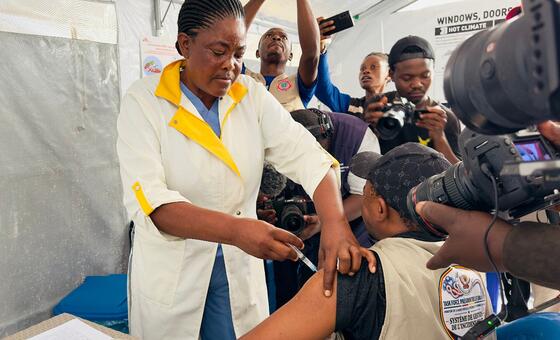
The WHO medic recently returned from her second visit to the DRC since the current Ebola outbreak caused by the Bundibugyo virus was declared in May. She notably visited treatment centres in the epicentre of the epidemic, Bunia, capital of the Ituri province in the country’s northeast.
“Delays in seeking care, together with challenges in access and referral, continue to complicate the response,” she said, adding that WHO and its partners have focused on improving early recognition of illness, rapid referral systems, and early supportive care.
Beds boost
Dr Diaz said that as part of the response, Ebola treatment capacity has been expanded “from only a handful of beds…at the start of the outbreak to more than 1,600 beds across 50 treatment centres within the seven affected provinces,” with plans for further expansion to over 2,000 beds.
WHO and partners have also trained nearly 400 health workers, launching a training hub in Bunia for this purpose.
“Every patient bed requires a skilled workforce to provide safe, quality care around the clock,” Dr Diaz insisted.
A key component of supportive care for patients with Ebola, particularly those with severe illness, is oxygen, yet this life-saving medicine remains “unavailable or unreliable in many health facilities, especially in emergency settings”.
Ensuring access to oxygen “is about much more than cylinders or equipment”, the WHO official insisted, as it requires functioning health systems, reliable infrastructure, trained health workers and sustainable delivery systems “that reach patients wherever they are”.
“Without previous oxygen scale-up efforts in Ebola and Marburg [virus disease] responses, we would not be where we are today in terms of more positive outcomes for patients,” she concluded.
While there is currently no approved vaccine against Ebola Bundibugyo virus, vaccine trials are underway. Last week, WHO announced that 20,000 doses of the Ervebo vaccine, which has been effective against Ebola Zaire virus in the past, have been allocated for a research vaccination programme in Ituri province.