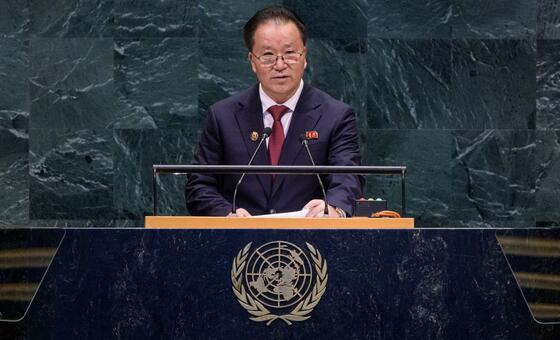
Addressing the Assembly’s annual high-level debate, Vice-Foreign Minister Kim Son Gyong painted a bleak picture of global affairs, pointing to growing distrust, conflicts, climate-related disasters and socioeconomic pressures.
He argued that the United Nations was failing to fulfil its responsibilities because of “high-handedness and unilateralism” by a small number of States and called for greater adherence to the purposes and principles of the UN Charter.
Mr. Kim said respect for sovereignty, security interests and countries’ right to development was essential to overcoming current crises.
‘No turning back’
Much of his address focused on growing military tensions in Northeast Asia, particularly on and around the Korean Peninsula.
Mr. Kim accused the United States and its allies of increasing military pressure on his country through exercises and military deployments, singling out the US-Japan-Republic of Korea (ROK) security partnership.
He also strongly criticized Japan’s moves to expand its military capabilities, arguing that they were contributing to instability in the region.
Against that backdrop, Mr. Kim presented the DPRK’s nuclear arsenal as a defensive necessity and credited the country’s military deterrent with preventing armed conflict.
“The DPRK’s nuclear deterrent is the absolute might and irresistible force designed, from A to Z, to safeguard the sovereignty, security and peace against aggression and threat from outside,” he said.
He insisted that the country’s nuclear status had been established “physically and legally” and “can never be reversed in any circumstances or by any means”.
The DPRK, he added, would continue strengthening its ability to counter what it considers external threats while acting, in his words, as a “responsible nuclear weapons state”.
Self-reliance and development
Mr. Kim also highlighted his government’s domestic policy of self-reliance, saying the country had made economic and development gains despite the COVID-19 pandemic, extreme weather, geopolitical confrontation and economic difficulties.
He said a five-year economic development plan had been successfully completed and pointed to new construction projects and policies intended to improve living conditions.
Despite what he described as attempts by outside forces to impede the DPRK’s development, the country would continue pursuing its objectives through its own efforts, he said.
A UN ‘for all’
Turning to the future of the United Nations, Mr. Kim called for reforms aimed at increasing what he described as the Organization’s impartiality and ensuring more equal representation of Member States.
“It’s about time the UN undertook a reform,” he said, arguing that changes should be aimed at the Organization’s democratization rather than being centred on the interests of particular countries.
He said the growth of multilateralism and an increasingly multipolar world reflected rising demands for greater international equality.
Mr. Kim also pointed to climate change and the risks accompanying rapid developments in artificial intelligence and other emerging technologies as challenges requiring collective international action.
Marking 35 years since the DPRK joined the United Nations, he concluded by pledging that his country would continue working through the Organization to promote what it regards as international justice, peace and security, while defending its sovereignty, security interests and right to development.