The need is even greater amid growing threats to global stability and security from emerging infectious diseases as well as climate-related crises and conflicts.
What happened?
Over seven million lives were lost due to COVID-19, according to the UN World Health Organization (WHO).
The pandemic did not just claim lives. It shattered economies, disrupted entire health systems and exposed how unevenly rich and poor countries could access vaccines, tests and treatments.
The global response to the pandemic was described by UN Secretary-General António Guterres as a “story of human ingenuity and human failure”. Vaccines were developed at record speed, but the lack of preparedness meant the most vulnerable had the least access to care and suffered most.
A UNICEF worker travels down a river in Peru as part of the COVID-19 vaccination programme in September 2022. (file)
Why it matters
Viruses, like COVID-19, do not respect borders.
An outbreak detected in one country can quickly spread across the world, putting people everywhere at risk.
That makes surveillance, data sharing, research and development – as well as access to vaccines, diagnostics and treatments – all international priorities.
It’s also why human, animal and environmental health are now treated as one connected system. Over 60 per cent of emerging infectious diseases jump to humans from animals, so rigorous surveillance at that human-animal-environment interface is critical.
Technicians run tests at a sterile lab facility in the Philippines focused on pandemic research in 2021. (file)
The equity gap
COVID-19 laid bare stark inequities over who had access to vaccines, tests and treatments first. Richer countries with manufacturing capacity were far better prepared than poorer ones.
But, the equity issue is broader than access to vaccines, therapeutics and diagnostics. It also includes equitable access to skills, resources and financing.
Closing that gap is the core argument for treating prevention, preparedness and response as an international rather than a purely national issue.
A local market is cordoned off during the COVID-19 pandemic lockdown in Cambodia in 2021. (file)
A global pandemic agreement
The COVID-19 pandemic was a wake-up call to the world.
Global collaboration is key to preventing and responding to future pandemics. As UN Secretary-General Guterres has warned, “We must not repeat the mistakes of the past when the next pandemic strikes, as we know it will. That means working together.”
The international community has made progress.
The landmark WHO Pandemic Agreement, the first binding global accord on pandemic prevention, preparedness and response, was adopted in May 2025.
But, adoption is just the beginning.
Negotiators from countries still have to agree the Pathogen Access and Benefit-Sharing (PABS) annex to the agreement. That’s the mechanism for sharing virus samples and, in return, guaranteeing countries in need can access the resulting vaccines, diagnostics and treatments.
With negotiations on the annex advancing on Friday, once it is adopted by the World Health Assembly, the treaty can open for signature and national ratification.
It needs 60 ratifications to legally enter into force.
The agreement also establishes a global supply chain and logistics network to get medical supplies to countries during emergencies, and a new “coordinating financial mechanism” to support strengthening and expanding capacities for pandemic prevention, preparedness and response.
COVID-19 vaccines are packed in a solar-powered fridge in a hospital in Port-au-Prince, Haiti, in 2022. (file)
What needs to change?
To be better prepared before the next pandemic, the international community needs to focus on:
- Preventing outbreaks before they start and containing them from spreading
- Stronger preparedness, ensuring capacities and resources are in place, including for research and development
- A more robust response that ensures continuity of essential health services.
- The availability of surge and manufacturing capacity that is geographically spread with sustainable supply chains
Underpinning all of this is the need for sustainable and predictable financing and a legal architecture for international coordination and collaboration.
This week at the UN
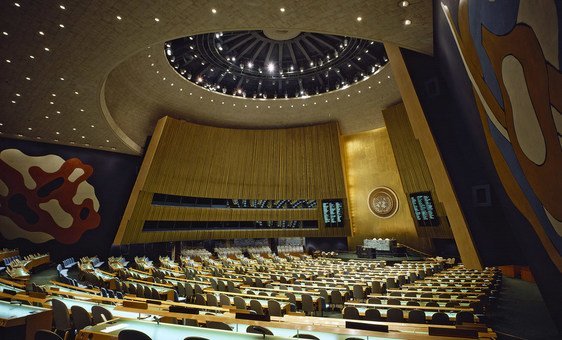
The 193-member General Assembly is holding a high-level meeting on pandemic prevention, preparedness and response on 25 September 2026.
The one-day meeting brings world leaders to UN Headquarters in New York to discuss coordinating global action, financing and equitable access to medical supplies.
A political declaration meant to lock in fresh commitments is expected.
What next?
The timing of the next pandemic cannot be predicted, so preparation is crucial.
The lesson of COVID-19 is that preparedness cannot begin when hospitals are already under strain.
It has to happen between pandemics, through stronger health systems, earlier warning, international cooperation and a basic principle that protecting people anywhere helps protect people everywhere.
A “pandemic emergency” is a communicable disease outbreak that spreads widely across multiple countries, overwhelming health systems, causing major social or economic disruption and requiring coordinated international action.
Get your facts straight about the WHO Pandemic Agreement here.