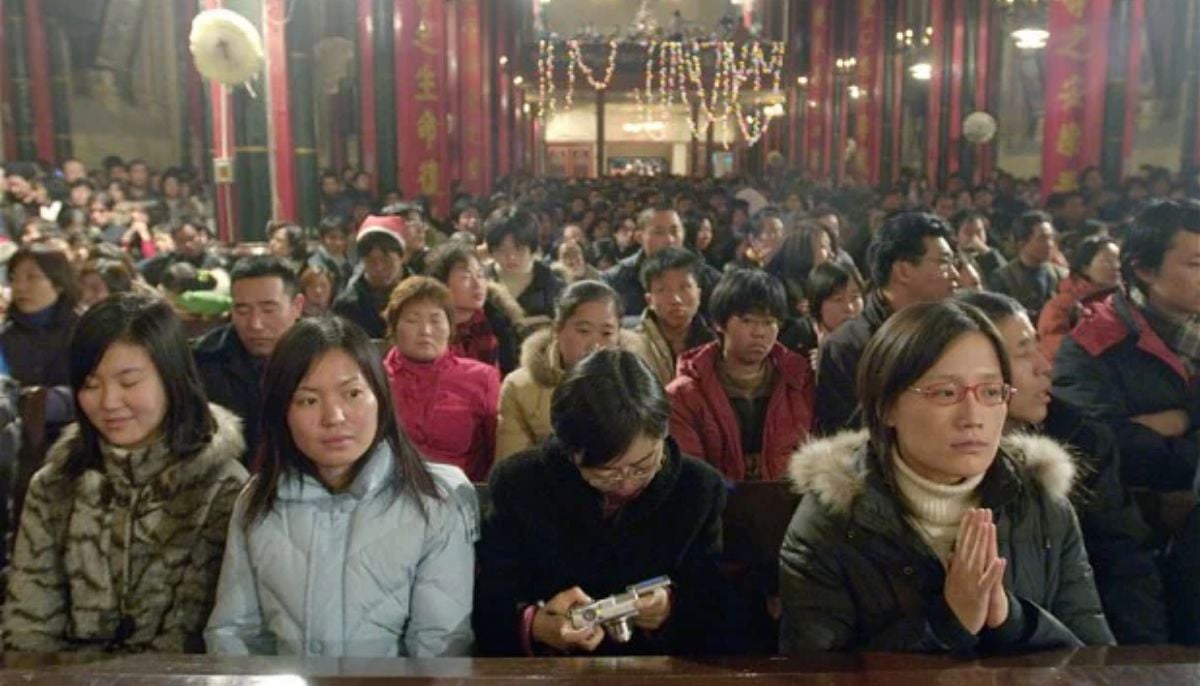
That China will reportedly become one of the world’s most Christian nations by 2030 remains a hot topic of ongoing debate, following recent data suggesting the growth may be stabilizing due to enhanced regulation.
Primarily, the report from the London Sunday Telegraph says that China will become the world’s most Christian nation by 2030.
A leading expert, Fenggang Yang, in a conversation on religion in China stated: “It is going to be less than a generation. Not many people are prepared for this dramatic change.
China has over 1.4 billion, making it the world’s second most populous country after India. Of this population, an estimated 58 millions of them are Protestant Christians.
According to CBN, it is estimated that the total Christian population, including Catholics, will hit 247 million by 2030, passing the United States, Mexico, and Brazil as the largest Christian nations in the world.
The People’s Republic of China is an officially atheist country but is changing fast as many of its 1.4 billion citizens seek spiritual comfort that neither communism nor capitalism seem to have supplied.
Mao, who was chairman of the Communist Party of China until his death in 1976, was referred to by Yang stating: “Mao thought he could eliminate religion. He thought he had accomplished this, but there is a growing underground church movement that can’t be contained.”
The number of Christian believers has increased drastically since churches began reopening following Christmas Mao’s death in 1976 signaled the end of the Cultural Revolution.
Four decades later, some believe that China is now poised to become not just the world’s number one economy but also its most populous Christian nation.
The widely cited prediction that China would become the most Christian nation in the world by 2030 has met with skepticism, as the original 2014 forecast by sociologist Fenggang Yang-which suggested China could have 247 million Christians by 2030-now seems increasingly unlikely.
Nonetheless, the recent growth not only slowed but has likely stalled due to intense state intervention.