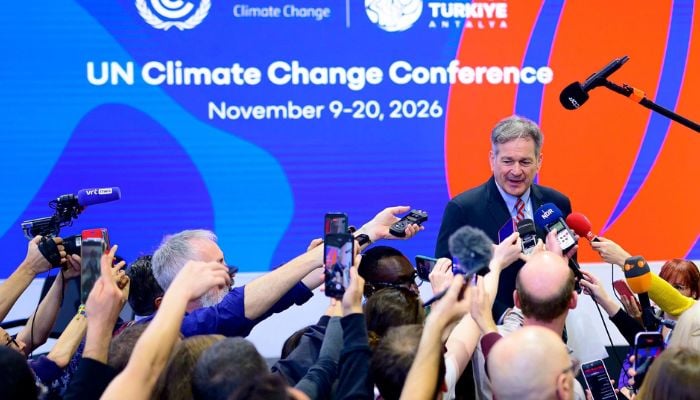
UN climate talks COP 31 have failed to reach a deal following the collapse of talks in Turkey on Sunday.
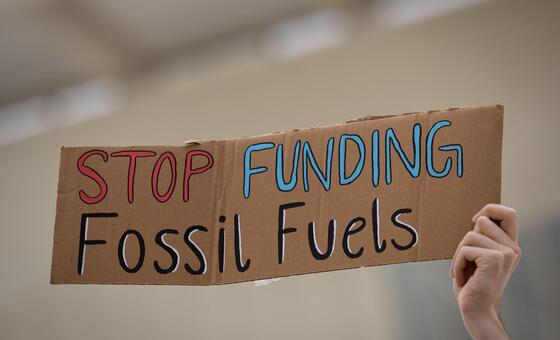
Marathon climate talks were jointly led by Australia and Turkey and chaired by Australian Climate Minister Chris Bowen. The negotiations failed over major divisions regarding language on phasing out fossil fuels which was vehemently opposed by nations such as Saudi Arabia.
The disagreement also occurred due to insufficient climate finance from wealthy nations for developing countries’ energy transitions and disaster adaptation. The issues like the timing of Intergovernmental Panel on Climate Change (IPCC) scientific work and language surrounding carbon-capture technologies also sowed divisions.
The ending of COP31 in a deadlock drew sharp reactions from various countries and organisations. Secretary-General António Guterres expressed frustration over the impasse and issued a warning, “There may be no consensus in the negotiating room. There is no ambiguity in science.”
The Marshall Islands accused negotiators of submitting to oil and gas interests, declaring, “We will not be forced to accept false solutions.” Nepal expressed disappointment at returning home without a cover decision.
The Philippines emphasised that disagreements must not prevent collective action, calling for climate finance to support mitigation, adaptation and loss and damage.
Other observers and officials, including Bowen, Al Gore, and Nikki Reisch, pointed to the COP rule requiring unanimous agreement as a fatal flaw that lets a small minority block progress.
However, changing the rule is a major hurdle because eliminating the consensus requirement requires consensus itself.
Despite the breakdown and past failures, such as in 2009, experts agree the COP process shouldn’t be abandoned because it uniquely brings nearly every nation together on equal footing.
Alternative pathways
The deadlock is speeding up interest in pursuing climate action outside of COP through two main avenues.
Legal action: Countries may turn to the International Court of Justice (ICJ) which previously confirmed states have a binding legal obligation to fight climate change, and other international courts.
“If the negotiations are not delivering what individual states need, then they’ll certainly consider turning to the ICJ and other international courts,” said Harj Narulla, an international lawyer who advised the Solomon Islands at COP31.
Side agreements such as ‘Plurilateral Processes’: Coalition initiatives among like-minded nations, such as the Santa Marta initiative which formed after COP30 to pursue fossil fuel phase-outs, are expected to expand into areas like carbon removal and adaptation finance.
Frank Jotzo, professor of environmental and climate change economics at the Australian National University said, “These plurilateral processes are growing.”
Bowen too said he sees the Santa Marta process becoming “increasingly important”, adding “doesn’t replace COP. It’s just another way of doing it.”