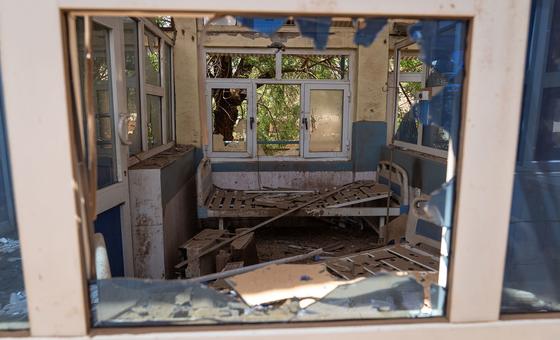
That information comes from the World Health Organization (WHO) which on Friday reiterated that the critical sector must not be targeted.
The UN agency maintains a surveillance system for attacks on healthcare, which includes hospitals and other facilities, personnel and patients, ambulances and other transport, as well as warehouses and supplies.
Since 2018, more than 10,400 attacks have been reported across 29 countries and territories, resulting in approximately 5,700 deaths and over 8,000 injuries. To date, no one has been held accountable.
Death, destruction and psychological violence
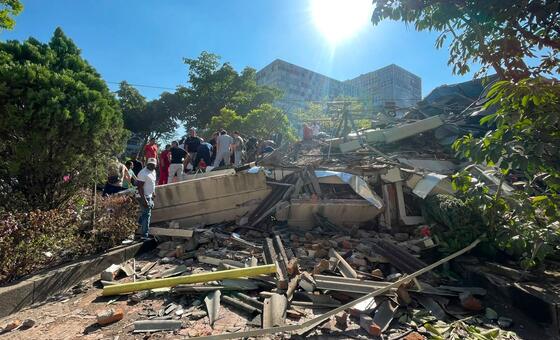
Between January and August of this year alone, WHO recorded more than 900 attacks resulting in at least 900 deaths and more than 1,400 injuries – a rate of more than four attacks a day.
Most incidents occurred in Ukraine, Lebanon and the occupied Palestinian territory, but other locations include Myanmar, Iran, Sudan, the DRC, South Sudan, Russia, Syria and Nigeria.
“What we are witnessing are multiple forms of violence,” said Altaf Musani, WHO Director for Humanitarian and Disaster Management, briefing journalists in Geneva.
Heavy weapons were the most frequently reported means of attack in 2026, he said, followed by destruction of healthcare “and then, of course, the psychosocial violence”.
Lingering impacts
Additionally, 44 reported incidents involving the abduction, arrest or detainment of healthcare workers and patients were recorded during this period. Detention of healthcare workers accounted for most cases, with 94 people affected.
Mr. Musani stressed that while these numbers matter, they do not tell the whole story.
“When a hospital is attacked, the impact is not only on the people inside the hospital that day,” he explained.
“It is the patient who cannot receive healthcare tomorrow. It is the ambulance that cannot make the next referral. It is the healthcare worker who cannot return to work, or medicine supply that can no longer reach facilities.”
Hospitals damaged, care reduced
The fact that attacks have wide-reaching and long-ranging consequences is supported by hard evidence.
Mr. Musani cited a study of 69 attacks in northwest Syria which found that outpatient consultations fell by 51 per cent the following day, with the reduction continuing for up to 37 days.
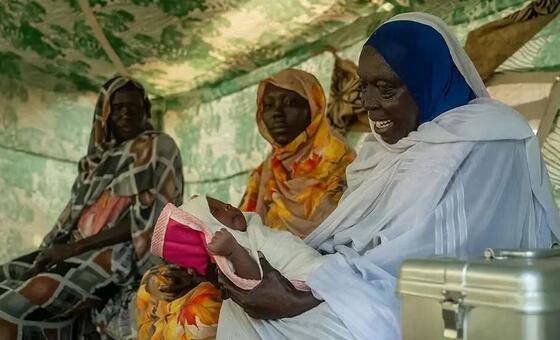
In Sudan, 37 percent of facilities were reported non-functional in 2026, while only three per cent of assessed facilities had inpatient care, he said.
Meanwhile, all 36 hospitals in Gaza have been damaged, with only half remaining partially functional, and primary healthcare similarly impacted.
Since the start of the conflict in Ukraine, WHO has verified more than 3,000 attacks affecting health facilities, ambulances, warehouses and supply chains.
Furthermore, 12 attacks on healthcare have been verified since the DRC declared the current Ebola outbreak in May, disrupting the response.
More than statistics
“These are not simply statistics,” said Mr. Musani. “Behind every percentage is a patient. Behind every damaged facility is a service lost. Behind every interrupted service is someone who will be left without healthcare.”
Moreover, attacks can also sow fear, preventing people from seeking care and health professionals from coming to work, while diluting community trust.
He called for making the human consequences visible, using evidence to protect healthcare and the people who depend on it, and holding parties to conflict accountable.
Following the briefing, a journalist asked if anyone had ever been brought to account for attacks. Mr. Musani said that of the more than 10,000 verified incidents mentioned, “not a single one has entered the accountability system.”
He said that WHO has neither the mandate nor the expertise to hold parties to a conflict to account, but its Director-General has repeatedly called for warring parties to be held accountable.