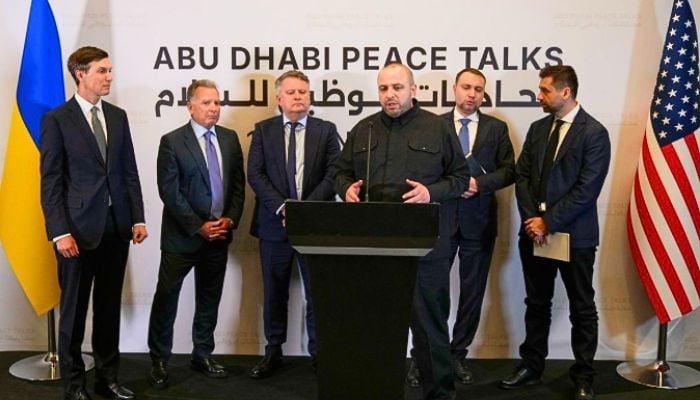
The conclusion of the U.S.-mediated talks in Abu Dhabi has brought mixed signals regarding the path forward, highlighting friction over Europe’s diplomatic role and the limits of current consensus.
Measured Progress:
Chief Russian negotiator Vladimir Medinsky acknowledged that mutual understanding was reached on select issues—notably laying groundwork for a massive prisoner exchange involving over 1,000 captives from each side while stressing that major structural differences remain.
Pushback on European Involvement:
Moscow has explicitly questioned the necessity of an immediate European footprint in the negotiation framework.
Medinsky remarked that Russia has not received any concrete peace initiatives or proposals from European countries, signaling that the Kremlin prefers a bilateral or U.S.-channeled format for now.
The U.S. and Ukrainian Push for Europe:
While European officials (including national security advisers from France, Germany, the U.K., and Italy, alongside EU and NATO representatives) were present on the sidelines in Abu Dhabi, Kyiv and its Western European allies insist that Europe must have a seat at every stage of real diplomacy since any long-term security architecture directly impacts continental stability.
Next Diplomatic Steps:
Following the conclusion of the Abu Dhabi sessions, U.S. mediators (including Jared Kushner and Steve Witkoff) are taking the framework to separate capitals—preparing to brief Russian leadership and coordinate further steps with Ukrainian and European partners.