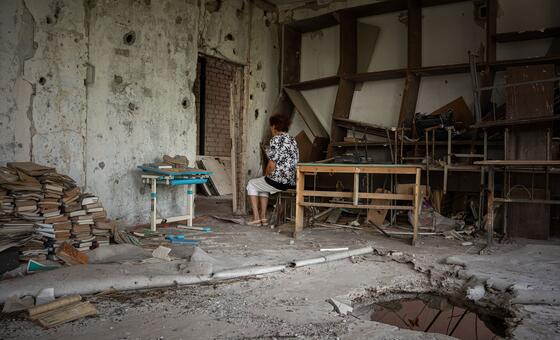

During their mission from 2 to 6 November, the three members of the Human Rights Council-mandated Commission of Inquiry met survivors, families of victims and human rights groups in Kyiv.
“People spoke of unimaginable suffering – homes destroyed, loved ones killed, and lives upended,” said chairperson Erik Møse.
The investigators – who are not UN staff and receive no salary for their work – said they documented continuing violations of international human rights and humanitarian law, mostly committed by Russian forces and officials, including indiscriminate attacks, torture, deportations and sexual violence.
These, they concluded, amount to war crimes and crimes against humanity.
The team also investigated abuses by Ukrainian forces, such as arbitrary detention and ill-treatment of people accused of collaboration, though limited access prevented full inquiries.
Justice must prevail
After hearing victims’ testimonies, the investigators renewed their call for accountability and reparations. “Justice must honour those whose lives were deliberately cut short,” they said, stressing the need for mental health and psychosocial support for survivors.
The visit follows the investigators’ latest report to the UN General Assembly, which detailed Russia’s coordinated actions to drive out Ukrainian civilians from occupied areas and forcibly transfer them elsewhere.
UN rights body regrets US withdrawal from human rights review
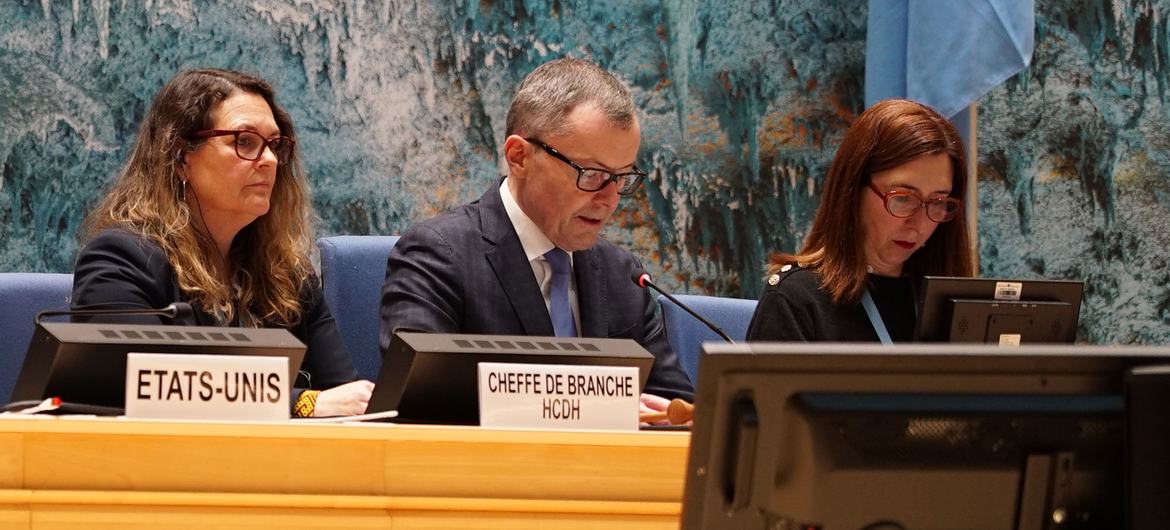
The UN Human Rights Council has expressed regret over the United States’ decision not to take part in a key review of its human rights record, scheduled for this week in Geneva.
The review, known as the Universal Periodic Review (UPR), is a process in which all UN Member States have their human rights performance examined by their peers.
The US was due to appear before the Council’s Working Group on Friday but declined to do so – the first time the country has refused to take part in its own review.
© UN Human Rights Council/Pascal Sim
Jürg Lauber (centre), President of the UN Human Rights Council, presides the meeting of the scheduled universal periodic review of the United States of America.
Postponed
Council members urged Washington to resume cooperation with the UPR and said they would reschedule the review for 2026, though it could take place earlier if the US re-engages.
The decision follows the Trump administration’s recent disengagement from the Human Rights Council itself, although all UN Member States that are not among the 47 members of the Council remain observers, able to represent themselves during proceedings.
The previous US withdrawal, in 2018 under the first Trump administration, did not prevent the country from taking part in its 2020 UPR – making this year’s absence unprecedented.
Documents compiled for the planned review, including reports by UN experts and civil society groups, remain available online. The US did not submit its own national report before the deadline.
The council said it would continue efforts to persuade the US to return to the process, stressing that the UPR system relies on equal participation by all 193 UN Member States.
Orlando Bloom highlights plight of Myanmar’s Rohingya
UNICEF Goodwill Ambassador Orlando Bloom visited Bangladesh this week to see the impact of severe cuts to aid work on children living in camps in Cox’s Bazar.
The star actor met some of the 500,000 children in the vast camp, along with their families.
They are “100 per cent dependent on aid”, but it is shrinking, he warned.
At risk from the funding cuts are education, health, protection and survival for people in the camps who are mainly ethnic Rohingya who fled persecution in neighbouring Myanmar – most of them following an systematic military operation in August 2017.
“It’s a very transient environment, there are so many people coming and going,” the veteran British actor and UNICEF champion observed.
Precarious and unstable
“We met a mother who has just arrived who still feels you just had to flee the conflict. It felt very unstable and unsafe. So, this is really, a lifeline for these families in these communities and without their support, they have nothing.”
In June, UNICEF had to temporarily close most schools in Cox’s Bazar because of funding shortages; almost 150,000 children were affected.
And although youngsters of all ages recently went back to class after a fundraising push, the threat of an imminent funding shortfall in early 2026 risks closing all schools again, potentially impacting more than 300,000 children.