
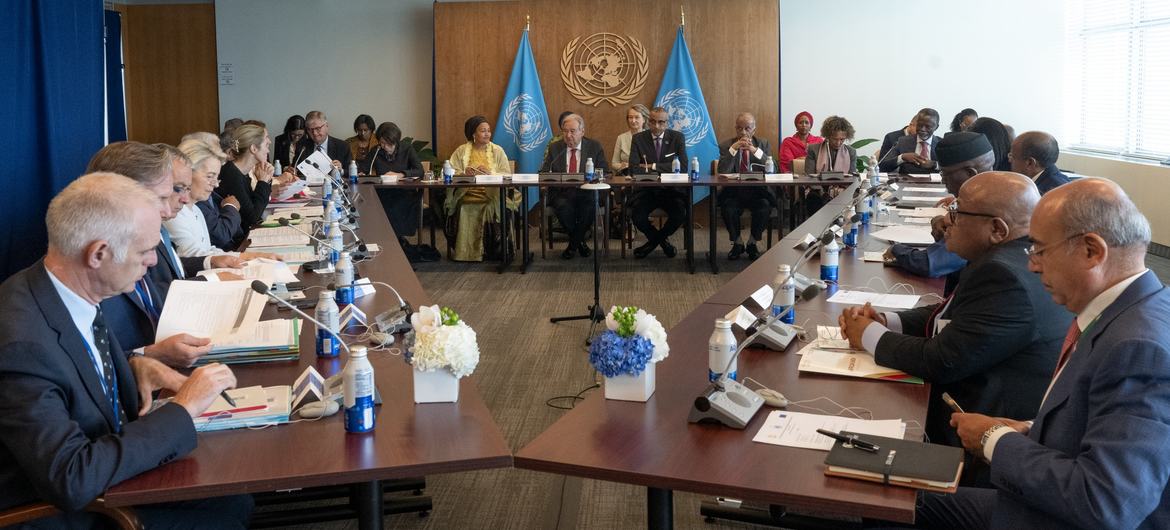
Meeting at UN Headquarters in New York on the margins of the General Assembly high-level week on Sunday, the leaders of the three organizations issued a joint communiqué after their sixth trilateral meeting.
They reiterated their support for multilateralism as “the most effective way to address today’s challenges,” stressing adherence to the UN Charter and voiced concern over rising disregard for international humanitarian law and human rights worldwide.
Focus on conflicts
Much of the communiqué focused on African crises, notably the devastating war in Sudan, now in its third year. The three organizations called for intensified collective support to secure “an immediate cessation of hostilities and a sustainable solution” through inclusive political dialogue.
They also pledged stronger coordination in the Sahel, where violence by armed groups continues to destabilise communities and reaffirmed support for reconciliation and development efforts.
On Libya, they endorsed the UN roadmap to revive the stalled political process, while urging continued efforts to address migration challenges in line with humanitarian standards.
The communiqué also expressed support for ongoing peace initiatives in eastern Democratic Republic of the Congo (DRC), backing both the AU Peace and Security Council and the UN Security Council’s recent resolution.
On Somalia, the three organizations reiterated support for the AU Support and Stabilization Mission, stressing the need for sustainable financing to ensure effective operations.
Sixth trilateral meeting of the African Union (delegation on the right), the European Union (left) and the United Nations (centre).
Partnerships and global challenges
Looking ahead, the UN, AU and EU said they would deepen trilateral cooperation to advance African-led solutions to peace and security challenges.
They highlighted Africa’s Agenda 2063 and the UN’s 2030 Agenda for Sustainable Development as guiding frameworks and noted preparations for the AU-EU Summit in Angola this November.
The leaders emphasised financing as a key priority, calling for full implementation of the Sevilla Commitment to unlock investment, address debt burdens and reform multilateral development banks. They also warned that climate-induced disruptions are hitting vulnerable communities hardest, urging ambitious commitments at COP30 in Brazil this November.
Marking the 25th anniversary of Security Council resolution 1325 on women, peace and security, they reaffirmed their commitment to advancing women’s leadership and participation in peacebuilding.
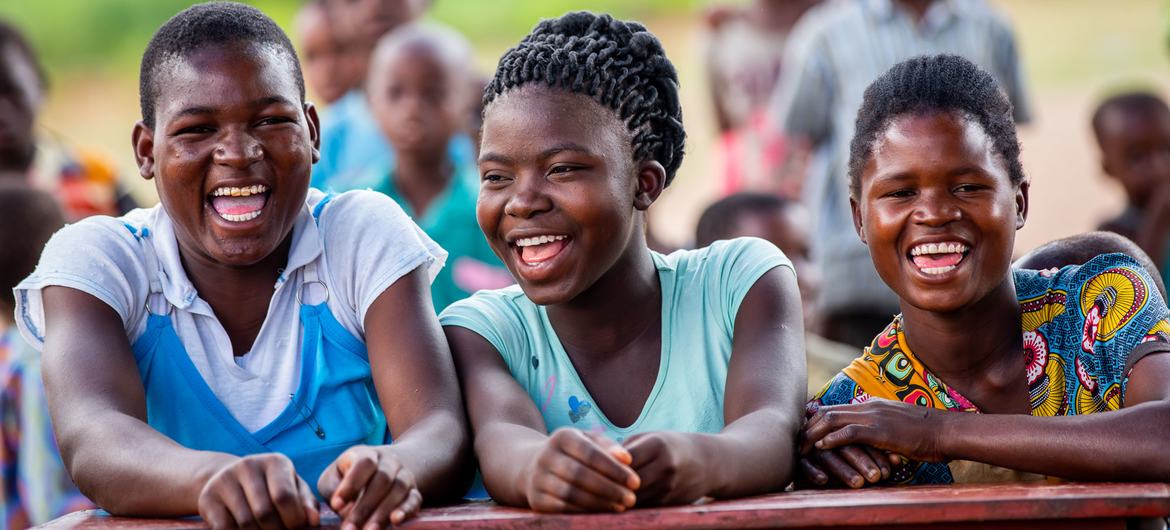
Teenagers in Malawi meet to discuss the challenges faced by young people in the southern African country.
‘Unstoppable Africa’
Earlier in the day, Secretary-General António Guterres addressed the Global Africa Business Initiative’s Unstoppable Africa 2025 forum, organized by the AU and the UN Global Compact – the world’s largest corporate sustainability initiative, with more than 18,000 companies and non-business signatories in over 160 countries.
The UN chief described Africa as “opportunity,” pointing to its young population, abundant renewable resources and growing role in the digital economy.
To harness this potential, he urged investment in renewable energy, sustainable food systems and digital infrastructure, while ensuring fair returns from Africa’s critical minerals needed for the clean energy transition.
Mr. Guterres said the world must end the “paradox” of a continent rich in arable land yet reliant on costly food imports, calling for greater support to smallholders and climate-resilient agriculture.
“Africa’s rise is undeniable, inevitable and unstoppable,” he declared, underscoring that reforms in international finance and governance, including permanent African representation on the Security Council, are vital to ensure the continent has a stronger voice on the global stage.