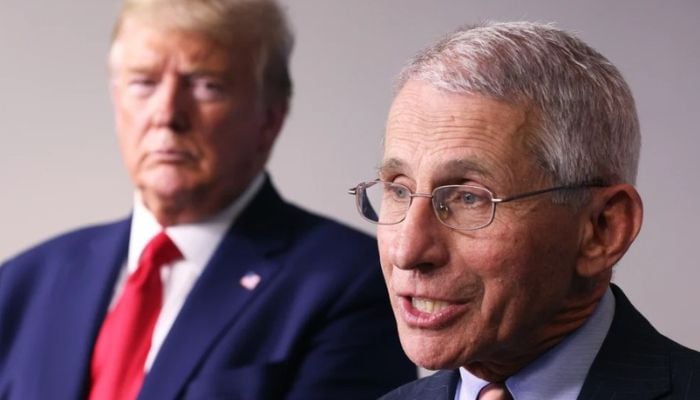
U.S. President Donald Trump sharply criticized Dr. Anthony Fauci on Truth Social, accusing the former top health official of making “too many bad calls” during the COVID-19 pandemic and claiming he “always tried to protect China.”
The remarks came as Fauci appeared before a Republican-led Senate committee in a closely watched hearing.
Trump defended his administration’s pandemic response, calling Operation Warp Speed “a spectacular success,” while blaming the Biden administration for allowing Fauci to retain influence after Trump left office.
During the hearing, chaired by Senator Rand Paul, Fauci invoked the Fifth Amendment and declined to answer questions, arguing that the inquiry reflected what he described as an “unhinged obsession” and an effort to trap him into committing perjury.
Trump’s renewed criticism followed a dramatic appearance by Fauci before a Republican-led Senate committee chaired by Senator Rand Paul.
The hearing followed the release by Paul of more than 1,000 pages from Fauci’s pandemic-era diary, which reportedly detailed tensions between Fauci and Trump as well as internal discussions over the origins of COVID-19.
While the COVID-19 vaccines went through emergency use authorization (EUA) processes, critics and opponents of mandates labeled them “untested” or “experimental” because they were developed and rolled out in record time under Operation Warp Speed.
Citing what he termed an “unhinged obsession” and an attempt to back him into a perjury trap, Fauci declined to answer questions, invoking his constitutional right against self-incrimination.
Millions of Americans faced strict requirements from employers, universities, and the military, forcing many to choose between medical compliance or losing their livelihoods.
For critics, Fauci was the primary architect and public face of the institutional pressure campaign that pushed these mandates.
It comes after Fauci became a central figure in the U.S. pandemic response and a frequent target of criticism from opponents of COVID-19 restrictions and vaccine mandates.
Critics argued that vaccine requirements imposed by employers, universities, and the military forced millions of Americans to choose between compliance and their jobs, while supporters maintained the measures were intended to protect public health.