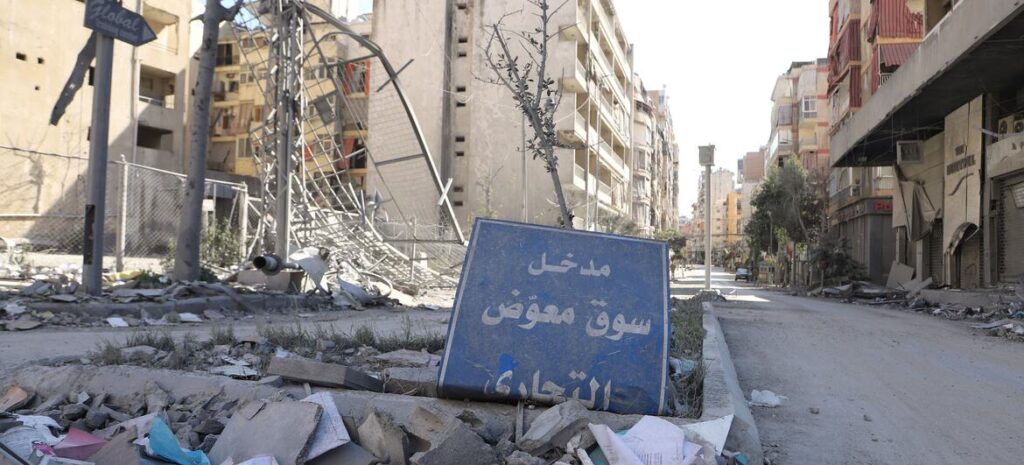

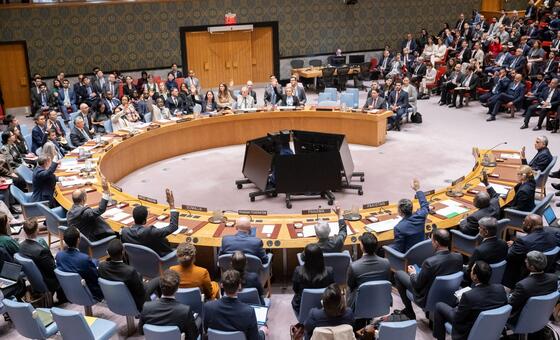
The draft resolution, tabled by Bahrain on behalf of Gulf Cooperation Council (GCC) members and Jordan, was adopted with 13 votes in favour and two abstentions (China and Russia).
The text “condemns in the strongest terms the egregious attacks” by Iran against Bahrain, Kuwait, Oman, Qatar, Saudi Arabia, the United Arab Emirates and Jordan, determining they constitute “a breach of international law and a serious threat to international peace and security.”
It also demands the “immediate cessation” of all attacks by Iran against these countries and calls on Tehran to comply fully with its obligations under international law, including civilian protection.
China’s abstention
China, which abstained, said it supported the concerns of Gulf countries but believed the text did not fully reflect the broader dynamics of the conflict.
“China is deeply concerned about the rapidly escalating situation in the Gulf region, which risks pushing the entire Middle East into a dangerous abyss,” Ambassador Fu Cong told the Council.
While noting that China condemns attacks against civilians and non-military targets, he said the draft resolution “does not fully reflect the root cause and the overall picture of the conflict in a balanced manner.”
He added that China therefore “had no choice but to abstain in the vote,” while urging all parties to halt military operations and return to dialogue.
Russian-led draft resolution
Shortly thereafter, the Council considered a draft resolution introduced by Russia addressing the wider regional crisis.
The text urged “all parties” to immediately stop military activities and refrain from further escalation – without naming any parties. It also condemned attacks on civilians and civilian infrastructure.
The draft received four votes in favour and two against, with nine members abstaining, falling short of the support required for adoption.
For a resolution to be adopted, it must secure at least nine votes in favour and no veto from the five permanent members.
Latvia votes no
Explaining Latvia’s vote against the text, Ambassador Sanita Pavļuta-Deslandes said her country supports the UN Charter’s prohibition on the use of force and the protection of civilians under international law.
“However, we could not support the presented draft as it was tabled by a permanent member of this council, which itself is violating daily for years the very principles it now calls upon others to respect,” she said.
“We agree this is not about a resolution submitted in good faith and despite our agreement with the values and objectives outlined in the text, Latvia was compelled to vote against,” she added.