
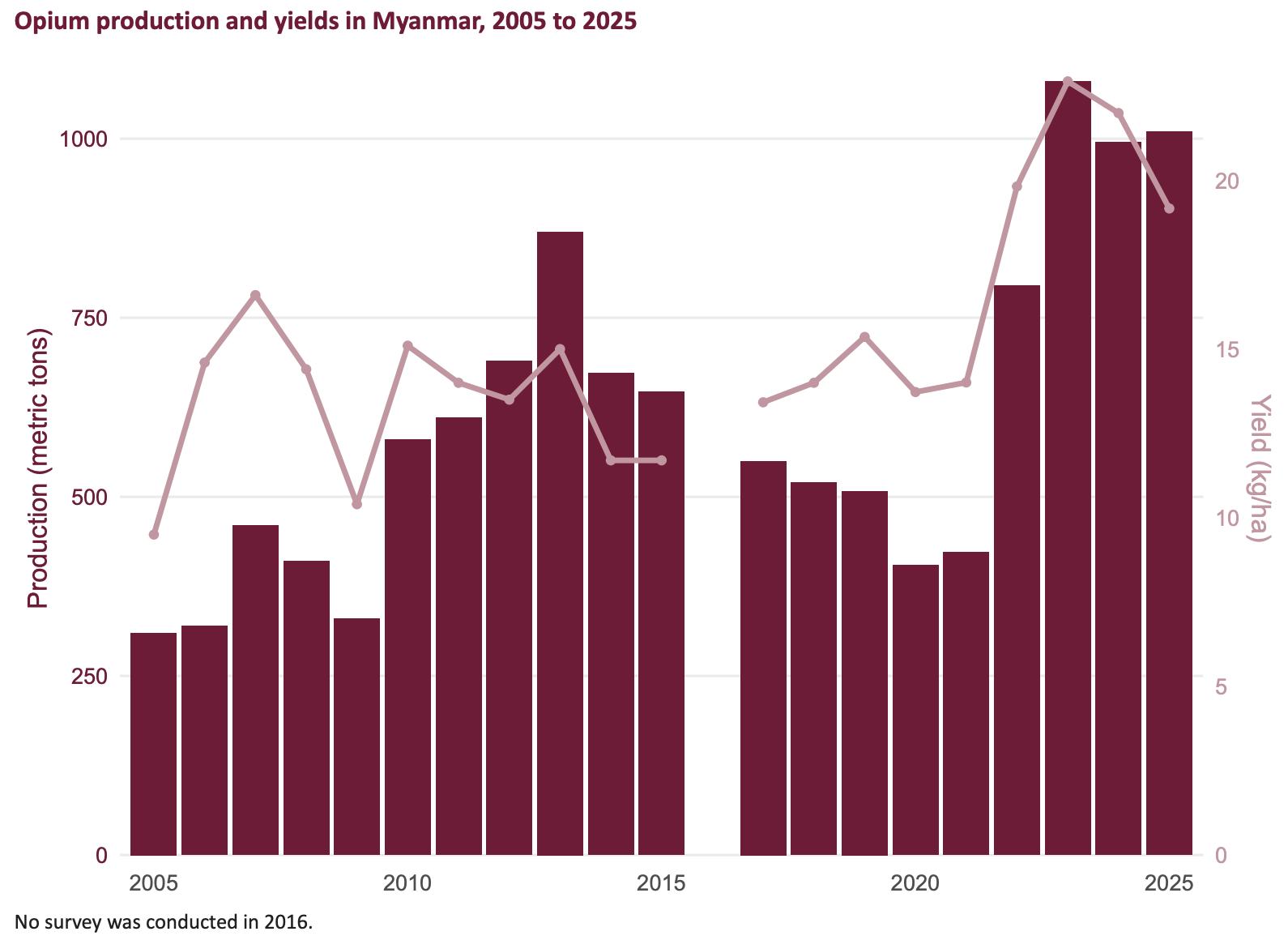
According to the Myanmar Opium Survey 2025, poppy cultivation rose by 17 per cent over the past year, from 45,200 hectares in 2024 to 53,100 hectares in 2025 – reversing a brief dip and confirming a steady upward trend since 2020.
A ‘critical moment’
Opium derived from poppies is the naturally occurring primary active ingredient used in the production of heroin. The three main global sources of illegal opium are Afghanistan, Colombia and Myanmar.
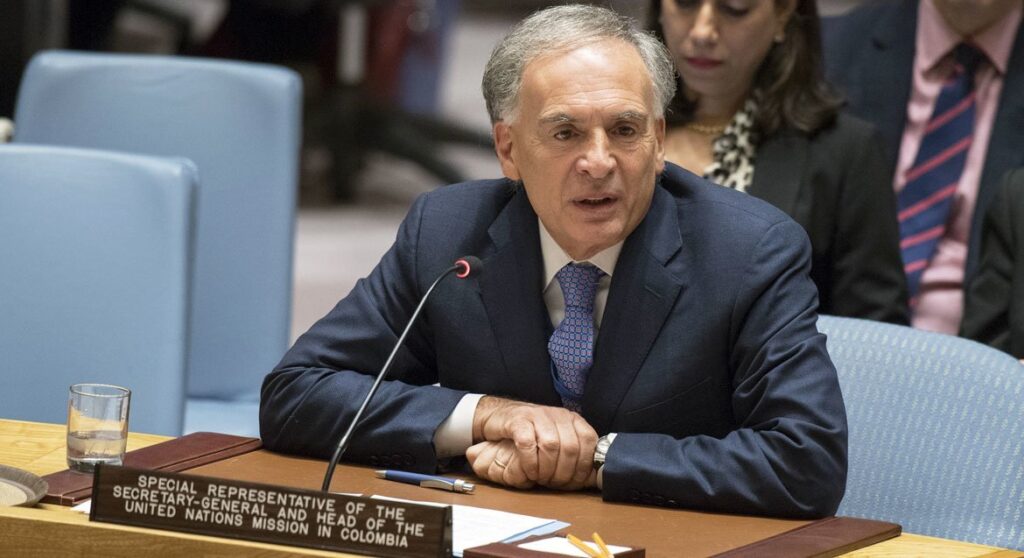
“Myanmar stands at a critical moment,” said Delphine Schantz, the head of the UN Office on Drugs and Crime (UNODC) for Southeast Asia and the Pacific.
“This major expansion in cultivation shows the extent to which the opium economy has re-established itself over the past years – and points to potential further growth in the future.”
Opium production and yields in Myanmar, 2005 to 2025.
Conflict-driven crop
The sharpest increases were recorded in East Shan state, where cultivation rose by 32 per cent, and in Chin state, up 26 per cent – both heavily affected by armed conflict, weak State presence and limited access to services.
South Shan, long the heart of Myanmar’s opium economy due to its rugged terrain, porous borders and entrenched trafficking networks, remained the country’s main growing area, accounting for 44 per cent of all poppy fields.
Main source
For the first time, significant cultivation was also documented in Sagaing region – believed to be the “epicentre” of Myanmar’s conflict since the 2021 military takeover – with 552 hectares under poppy and highlighting a growing shift toward the country’s insecure western border areas.
Myanmar has been the world’s main source of illicit opium since the collapse of production in Afghanistan, where cultivation dropped by about 95 per cent after a Taliban ban in 2023.
Total opium output is estimated at around 1,010 metric tons in 2025 – more than double Afghanistan’s current level.
Yields declined most sharply in North Shan and Kachin, where fighting has intensified, displacing tens of thousands of civilians. Field reports indicate that some farmers are replanting old fields without crop rotation and struggling to obtain fertilizers, further reducing productivity.
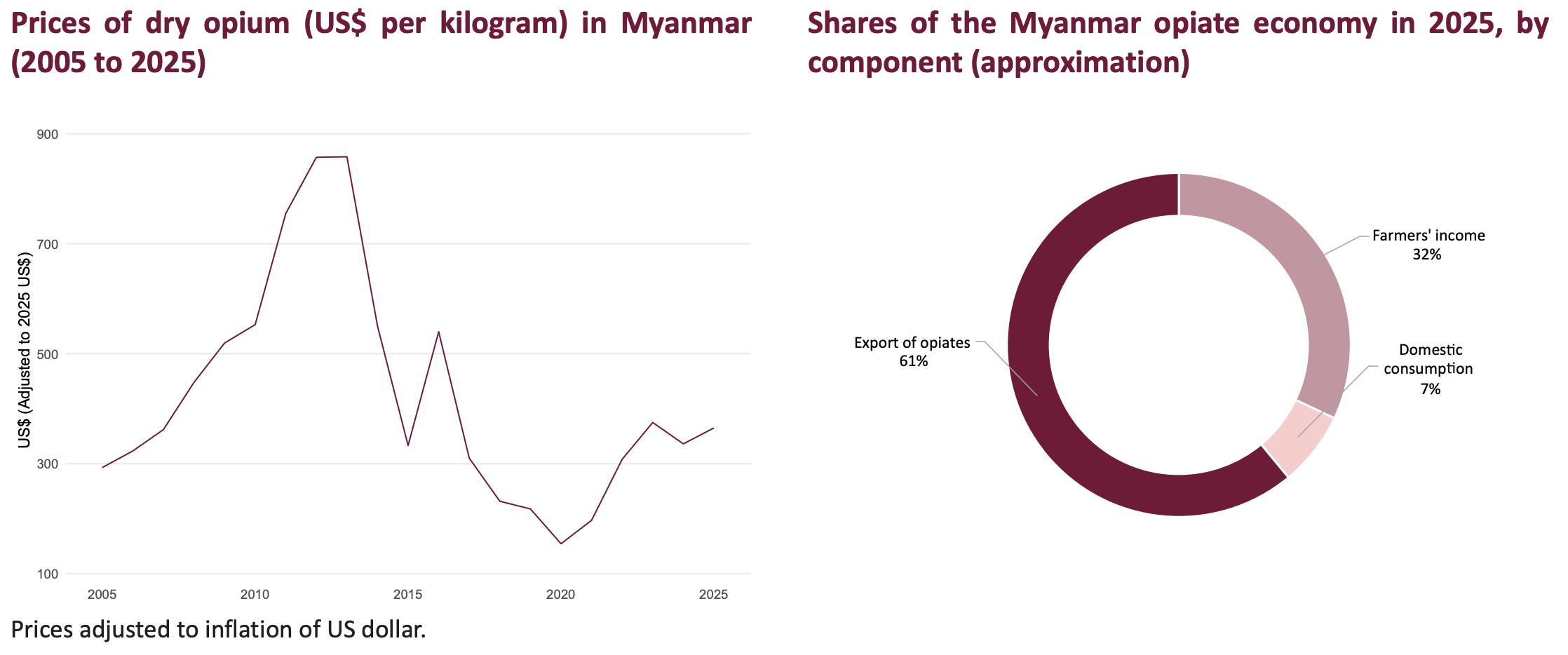
Prices of dry opium (left) and shares of the opiate economy in Myanmar.
A ‘survival crop’
Despite falling yields, rising prices continue to make opium an attractive survival crop.
National farmgate prices for dry opium averaged about $365 per kilogram in 2025, more than double the level in 2019.
UNODC estimates that farmers earned between $300 million and $487 million from opium sales last year – a vital income source as Myanmar’s licit economy remains fragile.
“Driven by the intensifying conflict, the need to survive and the lure of rising prices, farmers are drawn to poppy cultivation,” Ms. Schantz said. “Unless viable alternative livelihoods are created, the cycle of poverty and dependence on illicit cultivation will only deepen.”
Heroin flows shifting beyond Southeast Asia
The survey also points to signs that heroin originating in Myanmar is reaching markets previously supplied by Afghanistan.
European drug authorities reported several seizures in 2024 and early 2025 of heroin believed to have been produced in and around Myanmar from airline passengers traveling from Thailand to Europe.
Beyond opiates, Myanmar also remains a major hub for synthetic drugs production, including methamphetamine and ketamine, compounding what UNODC describes as a “highly challenging illicit drug situation” across Southeast Asia and beyond.
“What happens in Myanmar will shape drug markets in the region and far beyond, and requires urgent action,” Ms. Schantz warned.