Health systems, workplaces and communities must do more to support mothers and newborns, children’s agency UNICEF and the World Health Organization said, calling for stronger counselling, maternity protections and tougher safeguards against the marketing of breastmilk substitutes.
The appeal comes as countries mark World Breastfeeding Week from 1 to 7 August, under the theme Breastfeeding for a Sustainable Start in Life: Strengthen What Works.
Simple, powerful and vital
Breastfeeding is one of the simplest and most powerful ways to protect a child’s health. It provides infants and young children with essential nutrition, increases immunity, helps protect against serious illness, and supports cognitive development.
Mothers also benefit as breastfeeding helps to reduce the risk of noncommunicable diseases such as breast and ovarian cancers, and type 2 diabetes.
“Breastfeeding is vital,” UNICEF Executive Director Catherine Russell and WHO Director-General Tedros Adhanom Ghebreyesus said in a joint statement.
“By investing in proven solutions, we can give every child the best possible start in life and ensure every mother gets the care and services she needs.”
Clean, safe and readily available
Scaling up breastfeeding could prevent almost 400,000 child deaths and around 140,000 maternal deaths each year, the agency chiefs said.
WHO and UNICEF have long recommended that breastfeeding begin within the first hour of birth, that infants be exclusively breastfed for the first six months, and that breastfeeding continue up to two years or beyond, alongside safe and appropriate complementary foods from six months.
These practices remain critical to raising healthy babies, even during crisis such as the war in Sudan.
“Breastfeeding is important because it is a readily available, clean and safe source of food and hydration for infants and it also provides an immunisation system for babies,” said Rawan, a nutrition assistant with the UN World Food Programme (WFP) on the ground.
Progress and pitfalls
There has been measurable progress globally as exclusive breastfeeding in the first six months has increased from around 37 per cent in 2012 to over 47 per cent today, while the prevalence of breastfeeding up to two years of age has also risen in recent years, from 38 per cent to 50 per cent.
Yet progress is not happening fast enough, and many countries are lagging behind global targets.
“Coverage of services supporting breastfeeding remains low, policies are inconsistently enforced, and service quality is often inadequate, especially in low-income, fragile, and humanitarian settings,” the UNICEF and WHO chiefs noted in their statement.
‘The evidence is clear’
With the world offtrack on breastfeeding goals, they stressed that “the evidence is clear: cost-effective interventions include skilled breastfeeding support in health systems, community-based counselling, maternity protection policies, and protection from the exploitative marketing of commercial milk formulas.”
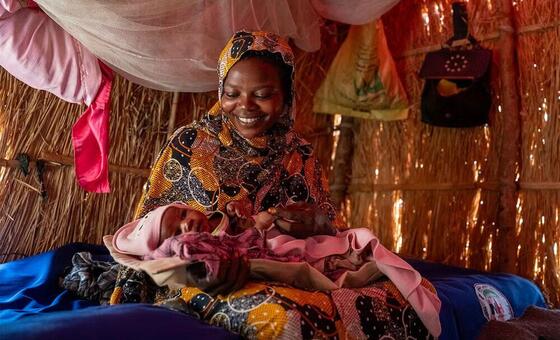
In Sudan, a UNICEF-supported clinic at the Garb Al Matar displacement camp is “nourishing hope” by teaching pregnant and lactating mothers good feeding practices for their babies – part of the full package of primary healthcare services provided to families uprooted by war.
The UNICEF nutrition sessions aim to equip mothers with the knowledge and skills to nurture, feed, and care for their children from an early age, helping protect millions from malnutrition.
A sound investment
This World Breastfeeding Week, UNICEF and WHO call on countries to strengthen health systems so mothers and newborns can receive quality breastfeeding support before, during and after birth.
They also urged governments to expand community counselling, invest in paid maternity leave and workplace protections, enforce the International Code that regulates the marketing of breastmilk substitutes, and keep breastfeeding support available in emergencies and fragile settings.
The agency chiefs stressed that the economic case is strong as every dollar invested in breastfeeding promotion generates an estimated $59 in economic returns through lower healthcare costs, improved cognitive development, higher educational attainment, and increased lifetime earnings.