
UN human rights office spokesperson Ravina Shamdasani also recalled the horror of a strike on Saturday which reportedly killed and injured dozens of girls in a primary school in Minab in the south of Iran.
“Children, little girls…at the beginning of the school day being killed in this manner, backpacks with bloodstains on them – this is absolutely horrific,” she said. “If there is any image that captures the essence of the destruction, despair and senselessness and cruelty of this conflict, those are the images.”
Ms. Shamdasani said that UN rights chief Volker Türk had been “deeply shocked” by the impacts of the hostilities on civilians and civilian infrastructure, and called for a “prompt, impartial and thorough investigation” into the circumstances of the Minab attack.
“The onus is on the forces that carried out the attack to investigate it. We call on them to make public the findings and to ensure accountability and redress for the victims,” she insisted.
Ms. Shamdasani also stressed that if attacks are found to be directed against civilians or civilian objects or indiscriminate attacks, they are “serious violations of international humanitarian law and may amount to war crimes.”
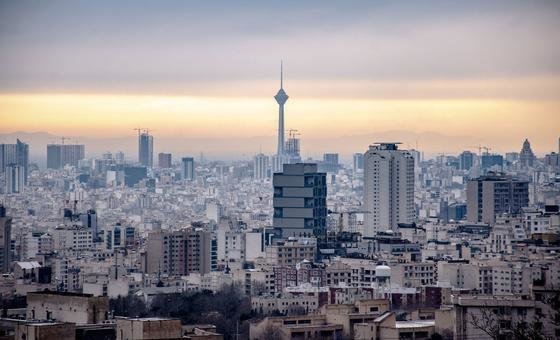
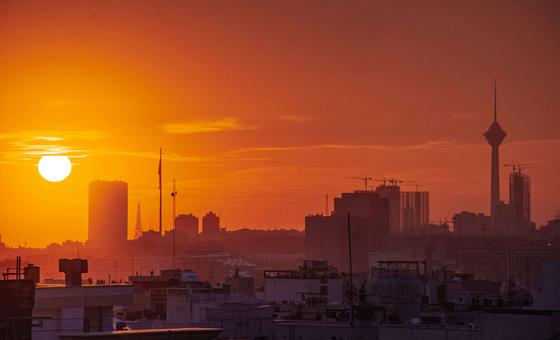
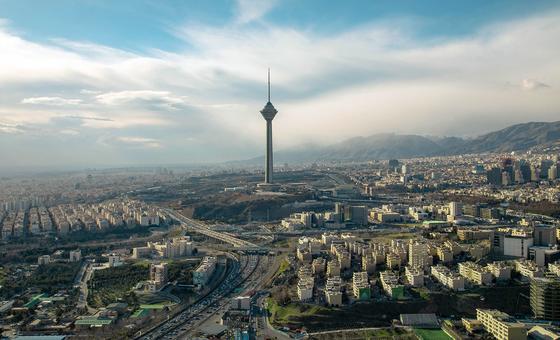
Tehran blackout
The OHCHR spokesperson expressed concern for the welfare of Iranians “given the Government’s record of cracking down with lethal force on [a] broad scale against those who oppose their rule and the new threats of senior officials against any expression of dissent at this time.”
She called on the authorities to safeguard Iranians’ fundamental freedoms and deplored people’s limited access to essential information amid a nationwide internet shutdown.
Since the conflict erupted on Saturday with Israeli and US attacks on Iran, Tehran responded by with counterstrikes against Israel and other US allies across the region. Ms. Shamdasani underscored the fact that besides Iran and Israel, the hostilities have so far impacted 12 other countries, destroying homes, businesses, airports and energy infrastructure.
Lebanese uprooted
In Lebanon, where armed militants Hezbollah entered the conflict, drawing Israeli strikes, “heavy displacement has been reported across parts of southern Lebanon, the Bekaa and southern suburbs of Beirut”, said UN refugee agency (UNHCR) spokesperson Babar Baloch.
Israel issued evacuation warnings to the residents of more than 53 Lebanese villages and conducted intense airstrikes across all three parts of Lebanon, he said.
As of Monday, “the conservative estimates suggest that nearly 30,000 people were hosted and registered at collective shelters,” Mr. Baloch said. “Many more slept in their cars on the side of roads or were still stuck in traffic jams, leaving the south to [reach] Beirut.”
According to media reports on Tuesday, Israeli ground troops entered southern Lebanon, following Hezbollah’s attacks on northern Israel.
The UNHCR spokesperson underscored the fact that many of the countries affected by the new conflict “already host millions of refugees and internally displaced people”.
Further violence and displacement risk overwhelming host communities’ capacities, he warned.
Supply chain fears
Severe disruptions to the transport of goods due to ever-broadening hostilities in the region are also affecting humanitarian supply routes and those who rely on them for their next meal.
Speaking from Cairo, Samer Abdel Jaber, Regional Director for the Middle East and North Africa at the UN World Food Programme (WFP), highlighted disruption in the Strait of Hormuz and the Red Sea which “will complicate maritime routes and delays and driving costs for most of our operations that depend on those routes”.
“With seas contested and airspace closing, we’re looking at adapting and [using] our supplier networks in other countries like Türkiye, like Egypt, like Jordan and Pakistan to support overland corridors,” he said.
The WFP official added that Egypt’s ports and the Suez Canal, “a key hub for us to support our operation in Gaza, but also in Sudan,” are still functioning.
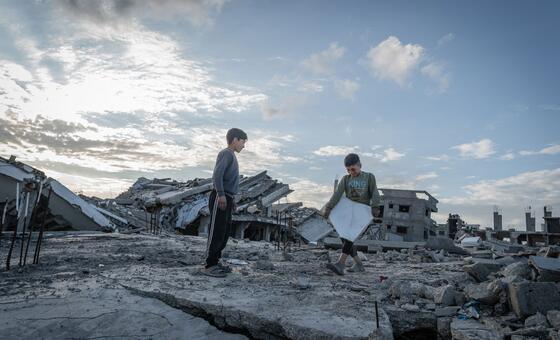
He said that Israel’s decision to close border crossings to Gaza since the beginning of the conflict had been a concern but that “good news” of an imminent opening of the Kerem Shalom crossing came on Tuesday.
According to subsequent media reports the crossing, on the southern border of the Gaza Strip, did reopen on Tuesday.
“That is timely for us and we need to get in aid as fast as we can,” Mr. Jaber said. “We have wheat flour that is sufficient only for 10 days and food parcels that will maintain our programmes only for two and a half weeks…We need to make sure that there is continuous and scalable flow of food into the Gaza Strip,” he concluded.