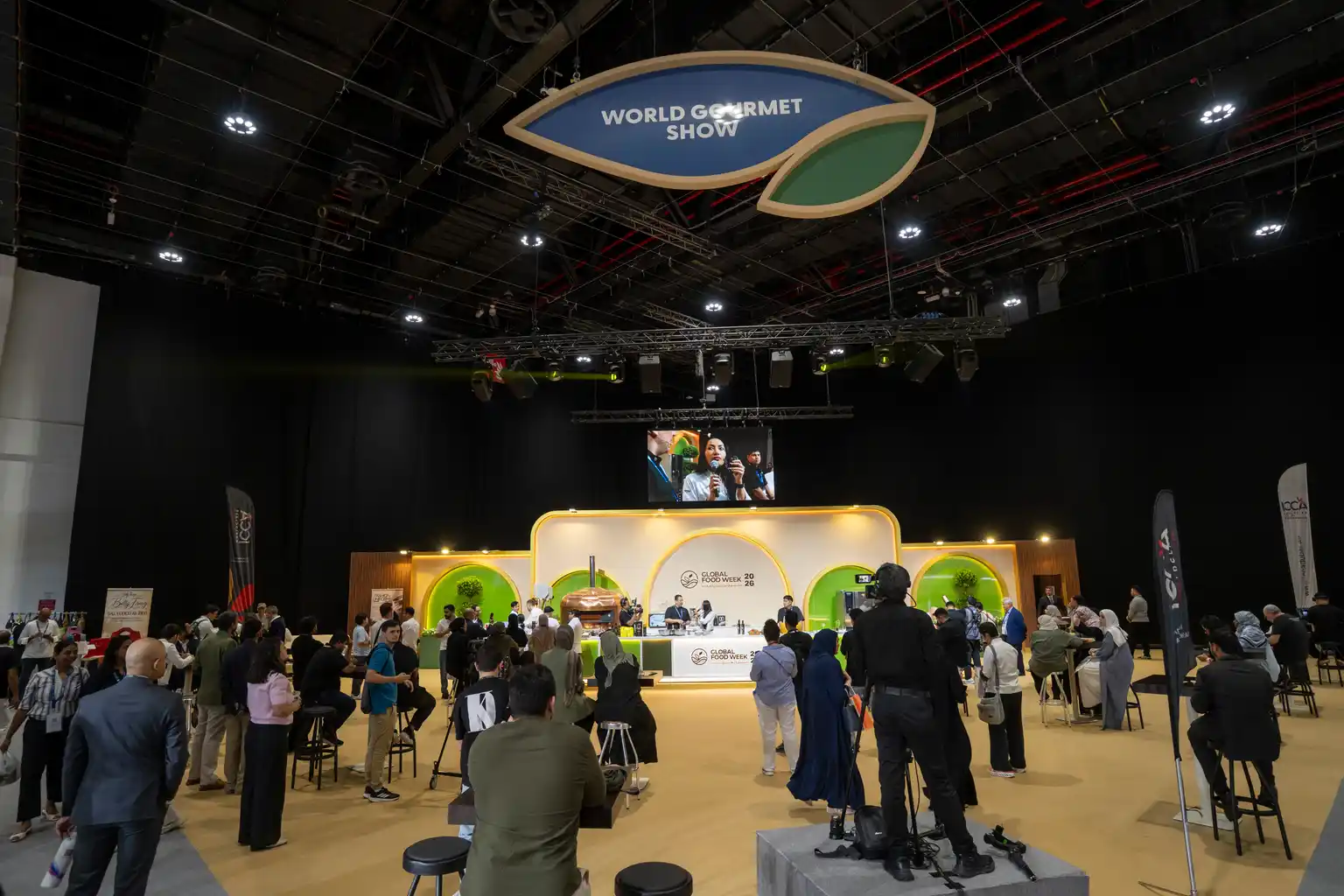
International Pavilions Praise UAE’s Role in Advancing Global Food Security Solutions at Global Food Week 2026
Abu Dhabi(News Desk):: International pavilions participating on the second day of Global Food Week 2026, held under the patronage of His Highness Sheikh Mansour bin Zayed Al Nahyan, Vice President, Deputy Prime Minister, Chairman of the Presidential Court and Chairman of the Board of Directors of the Abu Dhabi Agriculture and Food Safety Authority (ADAFSA), at ADNEC Centre Abu Dhabi, praised the UAE’s efforts to advance solutions that strengthen global food security and its role in hosting major international events that showcase the latest agricultural technologies and products supporting sustainable food production and resilient global supply chains.
Dr. C.B. Singh, Deputy Director General at the Agricultural and Processed Food Products Export Development Authority (APEDA) under India’s Ministry of Commerce and Industry, commended the UAE’s initiatives and leadership in developing the food ecosystem and enhancing food security. He highlighted the country’s important role in promoting international cooperation and advancing more sustainable and resilient solutions to address the challenges facing global food systems and supply chains.
His remarks came during the participation of the Indian Pavilion at the exhibition accompanying Global Food Week, which is being held under the theme “Building Scalable Food Futures Together”. Organised by ADNEC Group, a Modon company, in strategic partnership with the Abu Dhabi Agriculture and Food Safety Authority (ADAFSA), the event brings together 2,580 exhibitors from 92 countries to showcase the latest innovations in agriculture and food production.
Dr Singh emphasised the importance of India’s participation in the event, noting the close relationship between the UAE and India and the growing opportunities to strengthen cooperation in food trade, agricultural products and food security.
He explained that the Indian delegation includes around 10 exhibitors and five major trade associations representing key sectors of the food and agriculture value chain, including rice, fresh fruit and vegetables, and horticulture. The participation also includes organisations representing producers and farmers, aimed at strengthening direct engagement with markets and trade partners.
Dr Singh highlighted India’s substantial production capabilities across a broad range of agricultural and food products, including grains, dairy products, fresh fruit and vegetables, processed foods and animal products. He noted that the participation aims to showcase these capabilities and create new opportunities for companies and producers to access the UAE market.
He added that food security, food corridors and logistics supply chains represent two key areas for cooperation, particularly in light of the challenges affecting global supply chains. He stressed the importance of developing joint solutions that help ensure the sustainable flow of food products while improving supply and demand efficiencies between the two countries.
Dr Singh further praised the UAE’s ongoing efforts to strengthen the food ecosystem and enhance food security, noting that the combination of strategic discussions addressing future challenges and opportunities alongside a trade exhibition that enables companies to showcase products and build direct business relationships gives Global Food Week a unique position as a platform that brings together dialogue, policymaking and commercial opportunities under one roof.
International participation at the event includes prominent pavilions from India, Kazakhstan, Kyrgyzstan and Sri Lanka, alongside specialised companies and organisations showcasing a broad range of agricultural and food products, particularly organic and natural products. Participants are also sharing expertise and solutions across agriculture, livestock production, animal feed, creating new opportunities for trade, investment and knowledge exchange.
Representatives from the international pavilions highlighted the importance of Global Food Week as a platform that brings together government entities, producers, farmers, companies and investors from around the world. They noted that the event provides valuable opportunities to establish partnerships, strengthen trade flows and enhance supply chains in support of global food security efforts.
The pavilions of Kazakhstan, Kyrgyzstan and Sri Lanka also showcased a range of agricultural and food products and solutions unique to their countries, while highlighting opportunities to expand cooperation in organic products, agriculture, livestock production, animal feed. Representatives emphasised the UAE market’s importance as a regional trade and re-export hub and a gateway to broader regional markets.
The diverse international participation in the exhibition reflects Abu Dhabi’s growing role in bringing together stakeholders from across the global food ecosystem and connecting producers, exporters, investors and decision-makers. This contributes to knowledge exchange, business development and partnership opportunities while supporting international efforts to build more efficient, sustainable and resilient food systems.
Asel Ibragimova, Head of Market Intelligence at ‘Kyrgyz Export’, the export development and promotion center under the Ministry of Economy and Commerce of the Kyrgyz Republic, said: “Kyrgyzstan’s participation in Global Food Week includes 10 companies returning for the fourth consecutive year. They are showcasing a wide range of food products for which Kyrgyzstan is known, including white honey, fruit preserves and natural mineral water sourced from depths of up to 150 metres below ground, alongside other products that reflect the capabilities of the country’s food and agricultural industries.”
Ibragimova added that participation in Global Food Week provides an important opportunity for Kyrgyz companies to build business relationships, establish new partnerships and strengthen their presence in the UAE market. She noted that the UAE serves as an important market and gateway to new opportunities across the GCC and wider Middle East. The country’s competitive advantages and position as a regional centre for trade and business, she said, help create broader opportunities for international companies and support the expansion plans of Kyrgyz businesses.
At the Sri Lankan Pavilion, exhibitors showcased a wide range of Ceylon tea products, one of the country’s most renowned agricultural exports. Participants highlighted the diversity of tea varieties and the distinct characteristics shaped by different growing regions and climatic conditions across Sri Lanka.
Representatives explained that Sri Lanka’s tea industry operates according to rigorous quality standards covering every stage of production, including processing, grading, blending, packaging and export. Ceylon tea carries a globally recognised quality mark and enjoys a strong international reputation. Exhibitors also highlighted the sector’s commitment to more sustainable production practices, noting the international recognition it has received for adherence to environmental standards.
The pavilion additionally featured green tea, black tea and other varieties targeted at international markets, helping to promote trade cooperation and create new market opportunities through Abu Dhabi.
Meanwhile, in the Kazakhstan Pavilion, four companies presented a range of food products, including beverages, processed foods and animal-feed products that support livestock and sheep fattening and contribute to increased meat production.
– Ends –