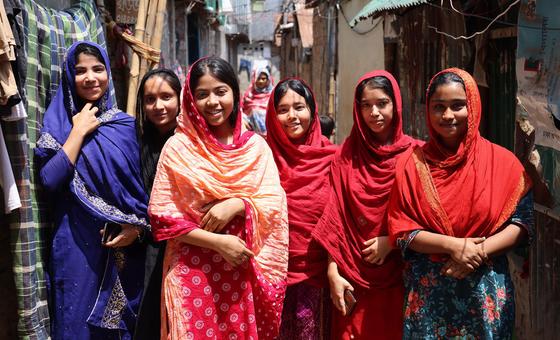
Alongside senior officials from the UN community, they commemorated the International Day of the Girl Child through declarations, dialogue and a show of solidarity for their peers in Afghanistan and elsewhere, whose voices have been silenced.
Nafisa from Ghana, 16, spoke up for girls “whose dreams are shaken by crisis”, such as a friend in a nearby village who had to leave school after conflict erupted, but joined a study group to continue learning.
“Her story reminds us girls are strong, girls are determined, girls never give up,” she said in a video message.
A world where girls can lead
The International Day is held annually on 11 October, and the event gave life to this year’s theme We are Here: Bold, Diverse, and Unstoppable – Demanding Action for Girls’ Rights.
Parents, chaperones and mentors were encouraged to sit in red chairs at the back of the room as “virtual moderator” Andrea in Bolivia welcomed attendees, who were urged to only use their first names as a safeguard.
“All around the world girls dream big, support one another and raise their voices for justice,” she said in Spanish.
“We may live in different places and speak different languages, but we share one dream – a world where every girl can learn, lead and live without fear.”
UN General Assembly President Annalena Baerbock advised participants to follow their interests “with passion” and do what they love wholeheartedly.
“My dream for you is that each day you do exactly that…and that nobody and nothing will stop you,” she said.
“No man, no religion, no legislation, no system that tries to silence you, no criticism or bullying from others at school, or these times online. Not even what often can feel like the loudest voice of all – your own self-doubt.”
Caught in crises
The commemoration was held as countries mark 30 years since the adoption of the Beijing Declaration on women’s rights and the World Programme of Action for Youth.
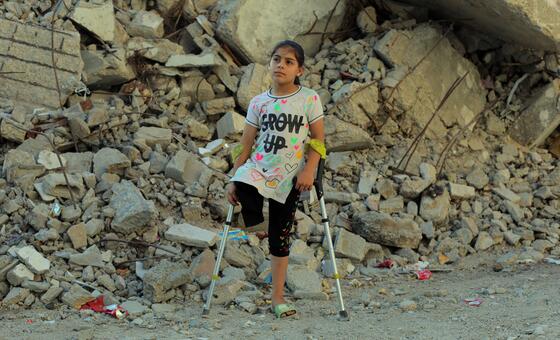
Yet despite these global promises, “girls all over the world are enduring the impacts of catastrophic climate change, of armed conflict, food insecurity and systemic gender-based violence and discrimination,” said Michael Gort, Deputy Permanent Representative of Canada to the UN.
He urged governments, civil society and the international community as a whole “to move beyond promises and to deliver real results,” saying “our role is to listen, to support and to act, guided by your experience and your expertise.”
Solidarity and commitment
Another moderator, Eleni, called for a moment of silence for all girls “whose voices need to be heard”, including those in war zones, violent situations, or in rural areas or indigenous communities. They were represented by an empty “solidarity chair” on the podium.
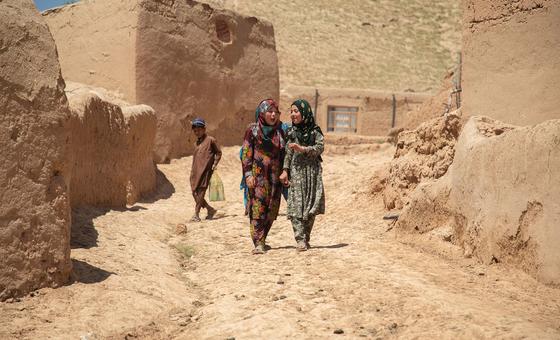
Ms. Baerbock later rallied the room to take a “selfie of solidarity” with girls in Afghanistan, who continue to face restrictions to their rights.
For its part, the UN Children’s Fund (UNICEF) “is committed to girl-driven programmes” in more than 80 countries, focused on areas such as protection, health, nutrition and economic empowerment, said Lauren Rumble, Associate Director for Gender Equality.
Furthermore, 10 per cent of UNICEF’s roughly $7 billion annual expenditure will go to networks for girls and women.
“We know that you all are capable of designing the change you want to see and making it happen. So, what we need to do is make sure we get the resources and investments directly into your hands so you can do it better and at scale,” she said.
Markella, who represented the Greek Orthodox Archdiocese of America, underscored the power of solidarity.
“Every girl has the ability to be an advocate for another girl,” she said.
“Even if she doesn’t have a UN microphone at her disposal, I urge her to work to create a safe environment for her fellow girls in any space and uplift her peers’ voices.”