
Anasy Media Marks the Establishment Celebration of“Discussion Hour” Cultural Majlis and Organizes an Episode Titled “Media and Behind the Scenes”
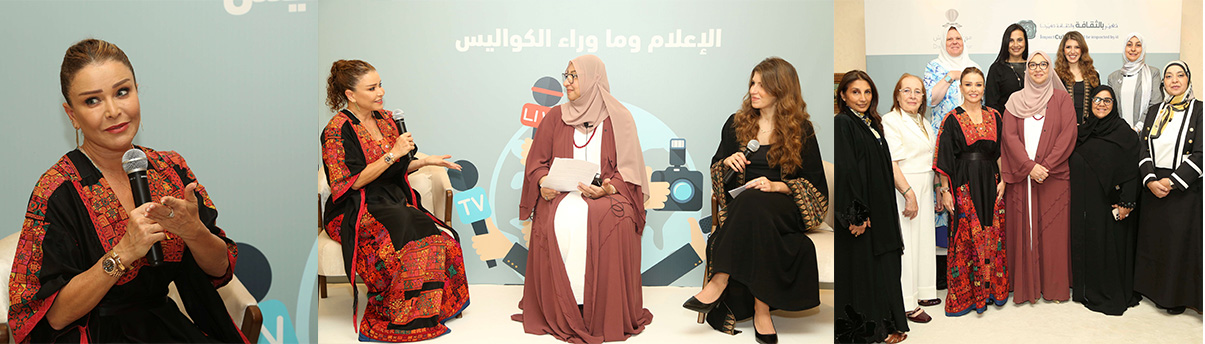
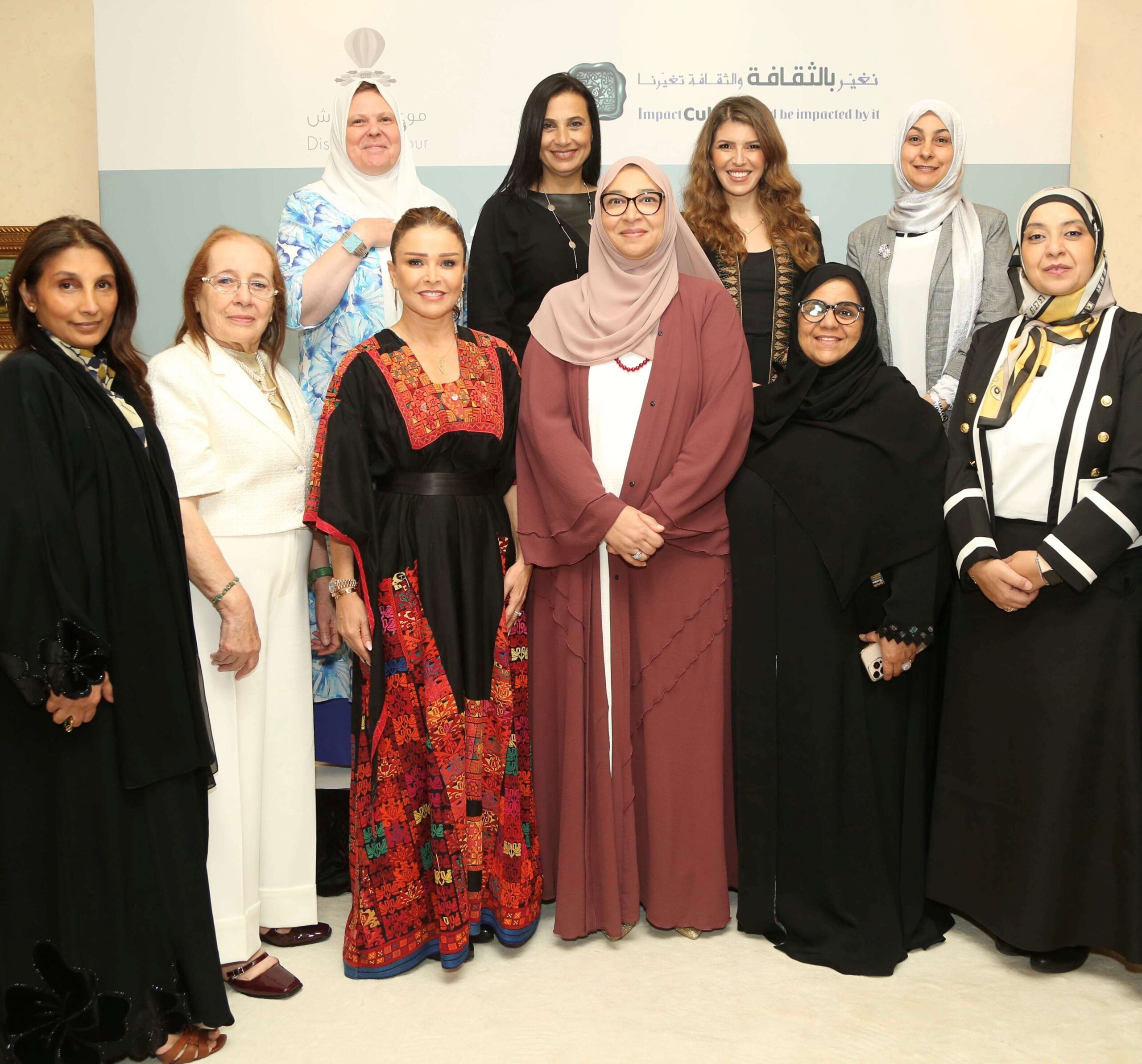
AbuDhabi(News Desk)Anasy Media organized a panel discussion entitled “Media:Behind the Scenes” as part of its Discussion Hour program. The session featured Maysoun Azzam, Senior Anchor at Al Arabiya Channel, and Shorouq Zakaria, journalist at Arab News, in the presence of Sheikha Alyazia Bint Nahyan Al Nahyan, founder of Discussion Hour,along with actress Farah Bseiso, writer Sheikha Al Jabri, poet Mira Al Qasim, director Faten Abdulaziz from Nile TV Cultural channel –Egypt, with several members of the Discussion Hour, and a number of cultural and media figures.
The discussion covered several key topics, including:
The reasons why some news stories are published while others are set aside;
What happens behind the scenes in terms of untold stories and alternative media narratives;
The extent to which artificial intelligence is used in shaping and reporting news;
The role of traditional media in an era of fierce competition from social media platforms that often deliver faster, more detailed coverage, especially of behind-the-scenes developments;
How to benefit from AI capabilities in serving the media’s role without compromising credibility;
The hidden challenges journalists face before reporting and publishing human-interest stories.
Fatma El-Nazoury opened the session by announcing the celebration of the 8th anniversary of “Discussion Hour” saying:
“We are fortunate to be here in the UAE, a country that has honored media and media professionals since its founding. Since its establishment, the UAE has attracted major writers, prominent media figures, and geniuses in the field. It has provided full
support to this sector, establishing media cities in Abu Dhabi and Dubai, hosting numerous Arab and international channels, and organizing global media conferences and events. All these efforts dedicated by the state to serve and highlight the role of
the media reflect the UAE’s stature and its deep awareness of the importance of this vital field. UAE media is characterized by awareness and professionalism, offering society and future generations, content that preserves Emirati values and culture, while embracing coexistence, tolerance, and respect for different cultures and opinions.”
Safeguarding the Role of Media as a Genuine Human Expression Digital Platforms: An Indispensable Partner Media presenter Maysoun Azzam began her talk by highlighting the transformations shaping today’s media landscape and the diversification of storytelling methods depending on platforms and audiences. She also discussed the importance of professional debate behind the scenes to achieve balance between journalistic integrity and engaging presentation.
Azzam elaborated on the role of AI in media and how it has become an indispensable partner or colleague. She also addressed the impact of digital platforms in accelerating news flow, noting the challenges this brings in terms of accuracy and credibility, and cited some notable errors by major outlets.
She emphasized on the possibility of using AI within an ethical framework that enhances media quality while preserving the human dimension of stories, especially through awareness of algorithmic bias and human intervention to counter it.
In conclusion, Azzam stressed that despite the changing tools, media must remain a truthful human message that gives life to the news and meaning to the story.
Why Certain News Stories Are Set Aside:
Key Considerations Azzam explained that every media organization has an editorial line, a kind of compass that defines its direction and determines not only which stories deserve to lead headlines, but also what is said, how it is said, and what is left out.
This is not merely about choosing which news to publish, but selecting angles that serve the outlet’s political or ideological perspective or
align with the interests of its investors and advertisers.
While organizations may not impose specific opinions, they shape the audience’s mental priorities through their editorial choices.
Since “a picture is worth a thousand words,” she said, images in media are not just clarifying tools but powerful instruments of direction. Camera angles, lighting, accompanying commentary, and even the moment of capture are all deliberate editorial choices that can magnify or downplay an event, evoke empathy, or cool anger, depending on the desired narrative.
The power of editorial policy becomes most evident in war and political crisis coverage, where the camera transforms from a documentation tool into a soft weapon shaping collective awareness.
Journalist Shorouq Zakaria added that media is a cultural product reflecting the values and traditions of society, and that the relationship between media and public opinion is reciprocal, each influencing the other.
She emphasized that the journalist’s duty is to verify accuracy and rely on trusted sources to maintain credibility, especially amid the rapid spread of information on social media, where misinformation is common.Zakaria noted that the reasons some stories are published while others are ignored depend on several factors, including relevance to the audience in terms of importance and timing, and a preference for stories that impact society and reflect public interests.
Artificial Intelligence is Not a Replacement for Journalists:
Zakaria stressed that AI cannot be fully relied upon, and using it to write journalistic material from scratch could harm a journalist’s credibility. She clarified that AI cannot replace human journalists since it depends on pre-existing data and lacks field experience, human intelligence, nuance, creativity, deep analysis, and emotional interaction, all essential aspects of journalism.
She explained that AI’s true value lies in accelerating tasks, such as transcribing interviews, proofreading, converting data into reports or media content (videos, podcasts, mind maps), searching for sources in different languages, and monitoring breaking news.
Azzam compared AI today to the early “calculator shock”, once seen as a tool for cheating, later embraced as an educational aid even in exams. “We must redefine our tools as partners, not enemies,” she said.
She added: “Media is no exception. We must not underestimate AI, it does not lack human sensitivity, nor is it incapable of perceiving what lies between the lines or the ‘spirit of the field.’”
She mentioned a personal experience that led her to this conclusion: she showed an AI system an image requiring intuitive human interpretation and emotional reading, and was surprised that the AI interpreted it exactly as she understood it herself.
Social Media and the Media Industry:
Azzam commented that audiences are no longer passive recipients of news but active participants in its creation. The rise of the “citizen journalist”, an individual with a phone instead of a camera but with the courage and instincts of a reporter, has redefined media dynamics.
Once deemed unreliable, citizen journalists learned to prove credibility through images, sound, timestamps, and verified testimonies. With every new tool, trust widened until citizen journalism became a complement to traditional media rather than its competitor.
While the concept is not new, technology has given it unprecedented speed and impact. Today, with a single click, an image or video can cross borders and reshape narratives.
However, this speed also brought risks. Many major media outlets made serious mistakes by rushing to publish before verifying sources, later issuing retractions, violating one of journalism’s core principles: accuracy before speed.
To address this, Al Arabiya launched the “Ana Ara” (I See)platform, enabling audiences to act as verified witnesses, using technology to authenticate image sources, locations, and timestamps, turning technology into an ally, not an adversary.
Zakaria added that social media users are now co-producers of news, with some platforms even outperforming traditional media in delivering behind-the- scenes details. However, journalists cannot publish such content until verified by official or reliable sources.
She noted that social media can help gather news from hard-to-reach areas but must always be supported by official confirmation. On the positive side, it allows officials to directly communicate their messages to the public.
She concluded: “A story is not confirmed until published by a credible media outlet relying on verified sources.” In an era of AI-generated videos and fake content, this credibility is crucial. Misinformation spreads rapidly, so media organizations must adapt to these competitive, tech-driven environments, many already doing so through podcasts, YouTube shows, community engagement content, and short-form videos on TikTok that explain stories and what happens behind the scenes.
Emotional Detachment: The Greatest Challenge
“Complete neutrality in media may be a virtue in politics, but sometimes it’s a betrayal of humanity.” With this statement, Azzam opened her remarks on the hidden challenges that journalists face before reporting human-interest stories.She shared that upon joining Al Arabiya, her first training was titled “How to Separate Emotion from the News.” The course aimed to teach journalists to view events professionally and conduct interviews objectively. The core idea was that journalists must understand rather than sympathize, to grasp the dimensions of a story without dissolving into its emotions.
“But over time,” she said, “I realized that this formula doesn’t apply to everything. If taking the side of human values is bias, then I openly declare mine, not just in content, but in choosing words that honor humanity, and images that express the moment more than describe the event.”
Zakaria shared her perspective: “The greatest challenge I’ve faced is maintaining emotional balance while preserving humanity, accuracy, and objectivity. Journalists must listen empathetically, support stories with documents and verified reports, and earn people’s trust while respecting their privacy. Before recording or photographing, I seek consent, assuring sources that my role is to amplify their voices, not provide material or logistical help.”“When writing,” she continued, “I narrate from an external perspective without emotional bias, presenting all sides objectively, even when the subject hopes for a favorable portrayal.”
She added that journalism is a high-pressure professionrequiring diplomacy and teamwork, ideally among people with journalistic backgrounds to avoid conflict and maintain shared purpose: telling the story in the best possible way.
“Journalism,” she concluded, “is a noble profession that gives people a voice, raises awareness, and can change lives. It demands both professionalism and deep humanity.”