“It’s 20 days and counting since Taiz has been cut off…we are seeing increasingly that the fighting makes it impossible for us to get in and impossible for people to get out,” said Jens Laerke, spokesperson for the UN aid coordination office, OCHA. “Access roads have been cut off and that means that very little fuel, food or other supplies have reached the city since.”
The escalation between Houthi separatists and the Aden-based Government began in early September, ending the relative calm brought about by a 2022 truce.
Among the agencies responding to chronic and acute needs across Yemen, the UN World Food Programme (WFP) reported that more than 800,000 people in Taiz have been cut off from assistance. This includes 600,000 people who depend on humanitarian assistance and 200,000 women and children. “We’re desperately trying to regain access to Taiz and we continue to support the broader operations across Yemen,” said Azfar Deen, WFP Regional Communications Officer for Eastern and Southern Africa.
Water price hike
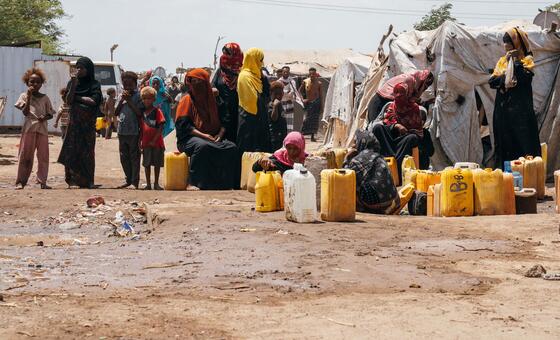
There is growing concern about dwindling water supplies inside Taiz City because most residents depend on water delivered by trucks, OCHA spokesperson Mr. Laerke explained. But “with the roads closed and the diesel to run the trucks very scarce, water production in the city has fallen by about half. And the cost of the truck water has roughly tripled. You can imagine what that does to these people who are trapped there,” he told journalists at a scheduled briefing in Geneva.
The UN Children’s Fund, UNICEF, highlighted deepening concerns about widespread hunger in Yemen. In Taiz alone, the agency has screened more than 168,000 children this year, with more than 52,000 found to be acutely malnourished, including more than 11,500 children suffering from severe acute malnutrition.
The agency has pre-positioned nearly 8,000 cartons of ready-to-use therapeutic food across Taiz governorate to help treat children with severe acute malnutrition. This is enough to sustain services for approximately three months, but “even when stocks are available, access constraints and disruptions to supply routes can make it more difficult for partners to transport supplies and for families to safely reach treatment”, said spokesperson Ricardo Pires.
Displacement grows
Between 7 June and 19 October 2026, the UN migration agency, IOM, recorded approximately 258,679 displaced individuals, the majority in Taiz and Lahj governorates. Many families are experiencing repeated movements and seeking refuge in already overstretched displacement sites and host communities.
In addition, as of 17 October, 3,836 Yemeni nationals arrived in Djibouti, reportedly fleeing the deteriorating security situation.
Reports indicate that at least 1,574 people have been killed and 6,939 others injured in the Yemen conflict since August.