5th United Nations Congress on Crime Prevention and Criminal Justice Continues to Shape Global Justice Agenda from Abu Dhabi
- Four thematic meetings and 45 ancillary meetings address current and emerging criminal and legal challenges
- UAE Minister of Justice holds five bilateral meetings and delivers remarks on tackling human trafficking across global supply chains
- Workshop 3 examines ways to strengthen data collection and analysis and enhance preparedness for new, emerging and evolving forms of crime
- UAE-organised meetings explore agentic AI and the country’s integrated model for oversight and anti-corruption
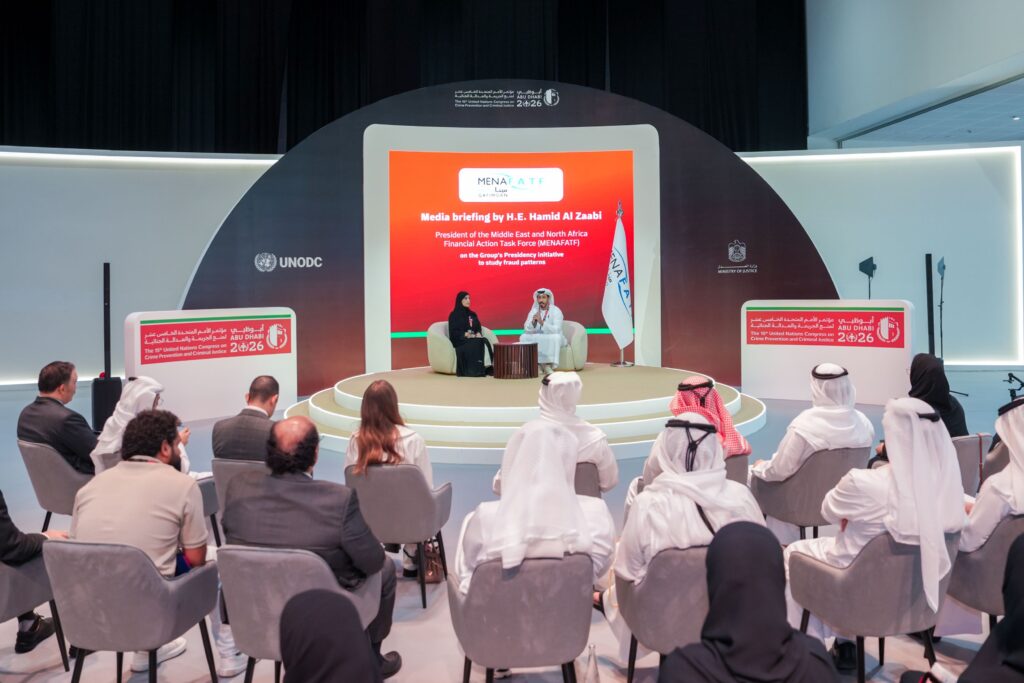
Abu Dhabi(News Desk):: The third day of the 15th United Nations Congress on Crime Prevention and Criminal Justice – Abu Dhabi 2026, currently taking place at ADNEC Centre Abu Dhabi, featured high-level discussions on women’s empowerment, youth protection, integrity in sport, combating human trafficking across global supply chains, and strengthening African-led coordination to address the nexus between crime and terrorism. Discussions also examined the development of evidence-based crime prevention strategies and the growing role of data and artificial intelligence in anticipating risks and strengthening criminal justice responses.
Proceedings on the third day continued with the High-level Segment and Workshop 2, alongside the commencement of discussions under agenda item 3 titled “Advancing innovative and evidence-based crime prevention strategies towards social, economic and environmental development.”
The day also marked the launch of Workshop 3 titled “Getting ahead: strengthening data collection and analysis to better protect people and planet in times of new, emerging and evolving forms of crime.”
SAFE-T Initiative
The General Women’s Union participated in the high-level thematic meeting titled “Leveraging technology to secure women’s leadership and empowered participation in public life”, organised in cooperation with the United Nations Office on Drugs and Crime.
The event featured an address by H.H. Sheikha Fatima bint Mubarak, the “Mother of the Nation,” Chairwoman of the General Women’s Union (GWU), President of the Supreme Council for Motherhood and Childhood, and Supreme Chairwoman of the Family Development Foundation (FDF).
GWU also announced the launch of the SAFE-T Initiative under the patronage of H.H. Sheikha Fatima bint Mubarak, reflecting the UAE’s commitment to harnessing technology responsibly to support women’s leadership, expand their participation in public life, and protect women and children from growing risks in the digital environment.
Advancing International Cooperation
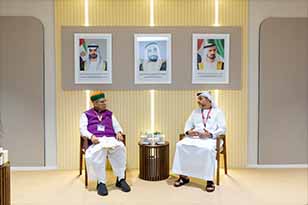
His Excellency Abdullah Sultan bin Awad Al Nuaimi, Minister of Justice of the UAE and President of the 15th United Nations Congress on Crime Prevention and Criminal Justice – Abu Dhabi 2026, held a series of bilateral meetings with representatives of the People’s Republic of Bangladesh, Canada, the Republic of Kazakhstan, the Republic of India, and the United Kingdom.
The meetings explored ways to deepen legal and judicial partnerships, strengthen the exchange of expertise, and expand cooperation in addressing organised and transnational crime.He also delivered remarks during the high-level meeting titled “From Source to Shelf: Tackling human trafficking across global supply chains”, which addressed the responsibilities of governments and businesses in identifying exploitation risks, enhancing due diligence, transparency and accountability, and preventing human trafficking networks from exploiting the complexities of global production, supply and trade chains.
Youth, Women and Operational Coordination
The four thematic meetings addressed protecting young people from crime in and through sport, strengthening responses to human trafficking across different stages of global supply chains, and expanding women’s leadership and participation in public life through technology, while addressing digital risks that may undermine such progress.
Discussions under the CONNECT initiative focused on advancing African-led operational coordination to address the nexus between organised crime and terrorism by strengthening information-sharing, institutional cooperation, capacity-building and joint responses to transnational threats.
Evidence-Based Strategies
Discussions under agenda item 3 focused on developing evidence-based prevention policies that address the social, economic and environmental drivers of crime, while linking crime prevention to sustainable development, quality of life and community resilience.
Workshop 3 examined ways to strengthen criminal justice data collection and analysis, improve the quality of indicators, and enhance information-sharing among institutions. Discussions highlighted the importance of improving risk forecasting and supporting more informed decision-making, while safeguarding privacy and ensuring the responsible use of data and advanced technologies.
The United Nations Crime Prevention and Criminal Justice Programme Network (PNI) Lab hosted a session entitled “From Evidence-Based Policy to Legal Tech Innovation: Building a Data Ecosystem with Criminal Justice Data.” The session explored the integration of data from police authorities, prosecution services, courts and the Ministry of Justice, enabling more effective analysis and evidence-based policymaking. A coordination meeting was also held for non-governmental organisations participating in the Congress.
45 Ancillary Meetings
The 45 ancillary meetings reflected the diversity of challenges facing criminal justice systems worldwide. Discussions addressed the development of the Arab Strategy against Organised Crime, accelerated implementation of the Bangkok Rules, strengthening global financial intelligence cooperation, and expanding formal and informal cooperation to combat financial crime and accelerate asset recovery.
Meetings also examined the protection of children from exploitation and recruitment by criminal groups, support for victims of forced marriage, efforts to combat cross-border human trafficking, and the development of public-private partnerships that promote people-centred justice and enhance protection for women, children and young people.
Environmental discussions focused on protecting marine ecosystems from organised crime, addressing the security implications of growing demand for critical minerals required for the energy transition, combating waste trafficking, tackling environmental crime in the Mediterranean region, and strengthening legal responses through the contributions of civil society and scientific research.
Other meetings addressed the future of organised crime, scam centres, online casinos and high-risk investments, privately manufactured firearms and other non-industrial small arms and light weapons, corruption within prisons, the digitalisation of justice systems, implementation of the United Nations Convention against Cybercrime, restorative justice, and strategies to reduce reoffending.
UAE Participation
The UAE organised a meeting entitled “Leveraging Agentic AI to Strengthen, Secure and Streamline National Risk Assessments”, which explored the potential of intelligent systems to analyse data, connect indicators and support national risk assessments, while maintaining robust governance, security safeguards and human oversight.
The UAE also organised “The United Arab Emirates Integrated Model for Oversight and Anti-Corruption”, highlighting the integration of legislative, institutional and oversight frameworks, as well as the role of prevention, transparency, accountability and inter-agency coordination in protecting public funds and strengthening integrity and public trust in institutions.
The 15th United Nations Congress on Crime Prevention and Criminal Justice will continue in Abu Dhabi until 1 October 2026 through plenary meetings, workshops, ancillary meetings, Youth Lab sessions and the accompanying exhibition, supporting implementation of the Abu Dhabi Declaration and helping translate international cooperation into practical policies, partnerships and initiatives.
-Ends-