Middle East Power Capacity Set to Quadruple by 2050 as Energy Demand Enters New Growth Era.
UAE solar generation share forecast to reach 50% by 2050 as AI, data centres, renewables and storage reshape the region’s energy landscape
Dubai(Web Desk):: The Middle East is entering a major new phase of energy transformation, with power demand expected to more than double by 2050 and installed power capacity forecast to quadruple, according to the latest outlook from Rystad Energy.
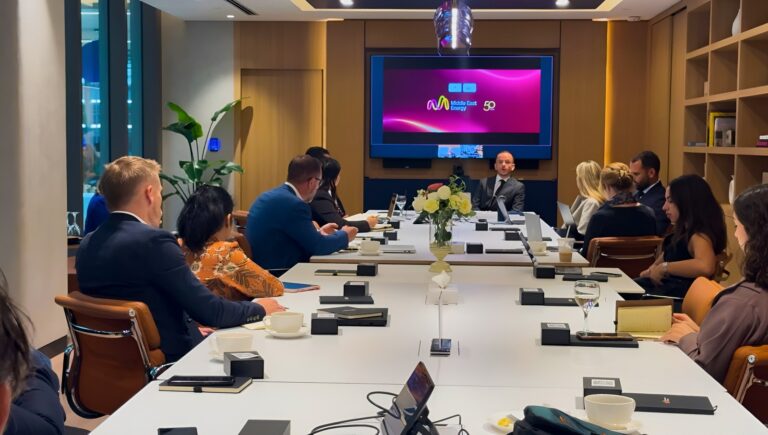
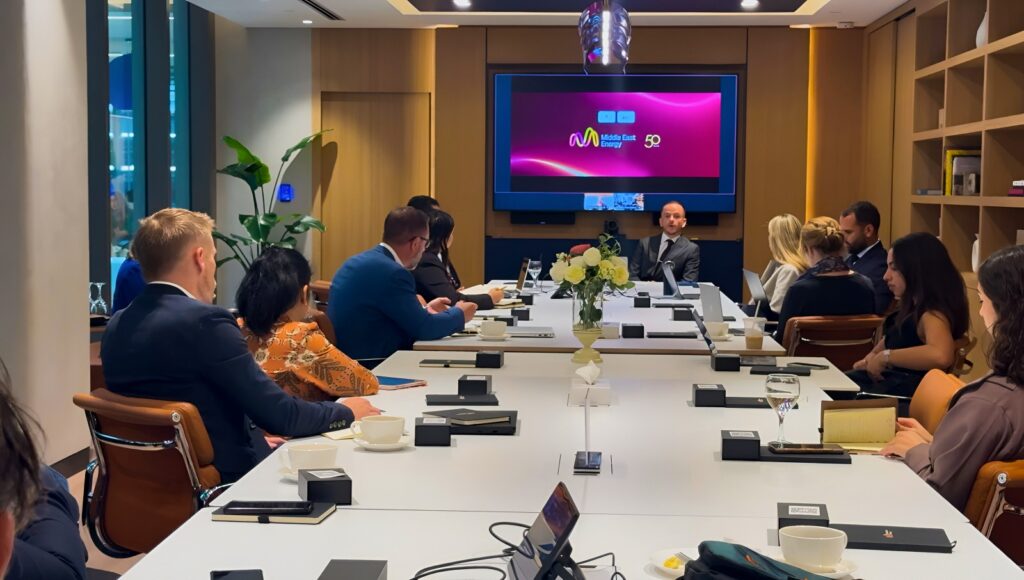
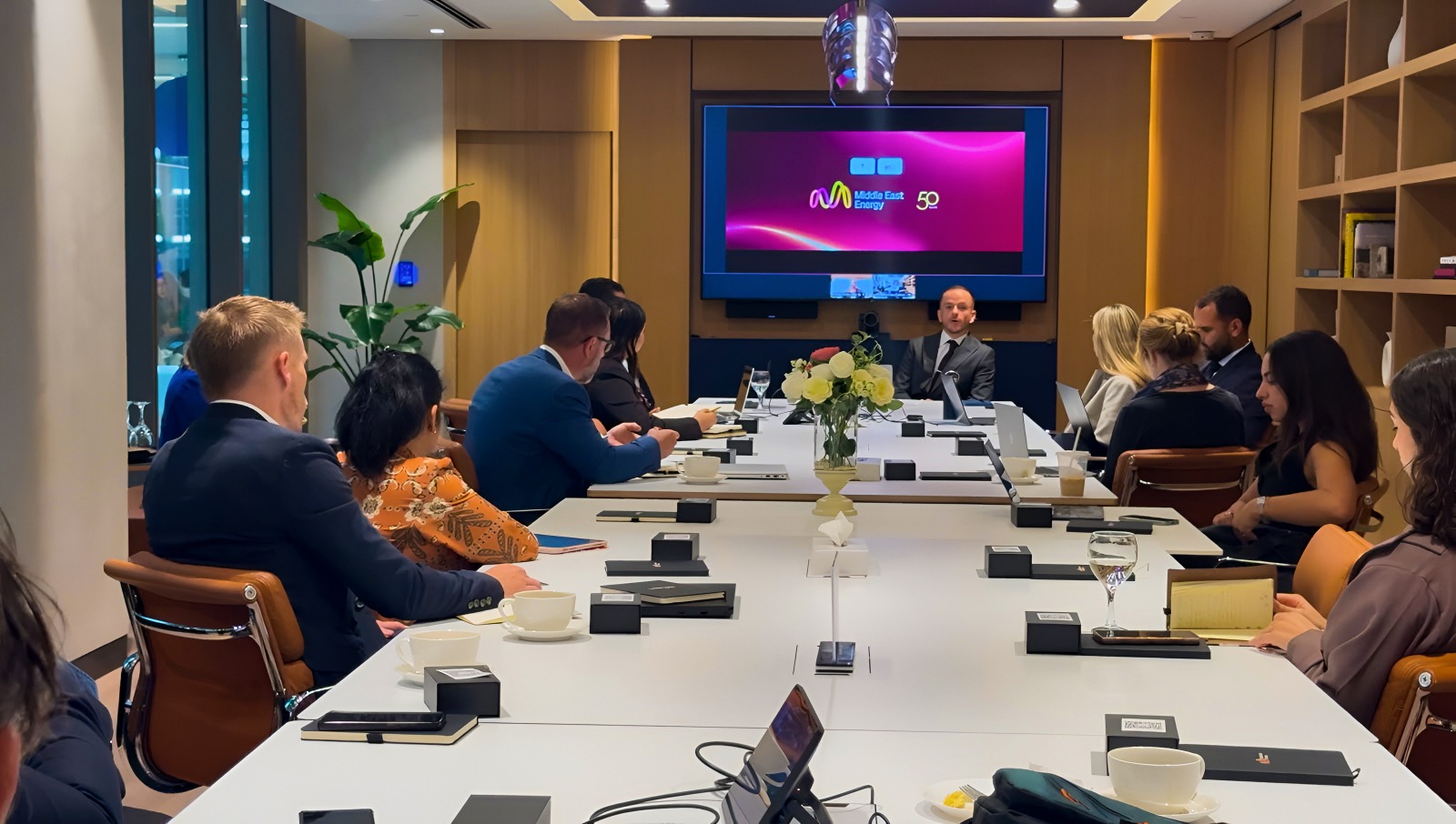
The findings were presented during the Q3/Q4 Energy Outlook Briefing hosted by Middle East Energy, in partnership with its knowledge partner Rystad Energy, ahead of the 50th edition of Middle East Energy, taking place from September 1–3 at Dubai World Trade Centre under the patronage of the UAE Ministry of Energy and Infrastructure.
Rystad Energy forecasts that the region’s installed power capacity will increase from approximately 580 gigawatts (GW) in 2025 to 2,328 GW by 2050.
At the same time, electricity demand across the MENA region is expected to rise from 1,671 terawatt-hours (TWh) in 2025 to 3,670 TWh by 2050.
The growth will be driven not only by traditional industrial and residential consumption but increasingly by data centres, hydrogen production, electric transport, commercial activity and public services.
UAE emerging as a key energy-transition hub
The UAE is expected to play a central role in the region’s evolving energy landscape. According to Rystad Energy, electricity’s share of the UAE’s final energy demand is projected to rise from 17% in 2025 to 42% by 2050.
Solar power is also expected to become a much larger component of the country’s electricity mix. Rystad forecasts that solar’s contribution to UAE power generation could increase from around 11% today to 50% by 2050.
The rapid expansion of renewable generation will also drive demand for supporting infrastructure, including battery energy storage. Regional solar manufacturing is forecast to grow sevenfold by 2030, highlighting the scale of investment expected across the clean-energy supply chain.
Carlos Torres Diaz, Head of Power at Rystad Energy, said the Middle East is entering a period of significant expansion in its power system, with renewable energy playing an increasingly important role while nuclear power and natural gas continue to contribute to energy security and reliability.
He noted that the Middle East and Africa are expected to become the world’s third-largest electricity-consuming region after Asia-Pacific and North America, with power demand in the Middle East projected to double by 2050.
AI and digitalisation transforming energy infrastructure
The briefing also highlighted the growing convergence of artificial intelligence, digitalisation and the energy transition.
Energy companies, utilities and infrastructure operators are increasingly required to deliver electricity and services at a speed and scale that traditional infrastructure was not originally designed to support.
As power systems become more complex, the industry is expected to place greater emphasis on grid modernisation, energy efficiency, storage technologies, smart infrastructure and improved asset utilisation.
Rystad Energy’s outlook also points to a diversified energy mix in the Middle East, with renewable energy expanding rapidly while gas and nuclear power continue to play important roles.
Aditya Saraswat, Head of Upstream Research MENA & Caspian at Rystad Energy, said the UAE was pursuing a balanced approach by increasing both conventional and alternative sources of energy while maintaining flexibility on the demand side.
Middle East Energy 2026 to bring together global industry leaders
The 50th edition of Middle East Energy is expected to attract more than 35,000 energy professionals from nearly 120 countries, along with more than 1,500 exhibitors representing power generation, transmission and distribution, energy storage and energy efficiency.
More than 210 speakers across five stages will address major industry issues, including AI and digitalisation, electricity demand, energy efficiency, grid infrastructure, energy storage, renewable energy and investment.
Mark Ring, Group Director of Middle East Energy, said the event’s role has expanded beyond being an industry exhibition, with growing participation from the investment community reflecting the increasing capital requirements for developing and modernising energy infrastructure.
He said the strong registration numbers for the 2026 edition demonstrate the event’s growing importance as a global meeting point for trade, investment and the advancement of power infrastructure.
Focus on women and energy leadership
The 50th edition will also place a special focus on the role of women in the energy sector through Powered by Her, a dedicated programme taking place on September 3 in partnership with the UAE Ministry of Energy and Infrastructure.
The programme will celebrate Emirati women and women across the wider energy industry who are contributing to the future development of the sector.
Other key events include the Dubai Global Leaders Session on September 1, bringing together leaders from the energy, climate and investment communities, and the Global Energy Efficiency Alliance Round Table on September 2.
The round table, conceived at the World Governments Summit and hosted by the UAE Ministry of Energy and Infrastructure, will bring together private-sector CEOs from the region and around the world.
With energy demand rising and the region undergoing rapid technological and infrastructure transformation, Middle East Energy 2026 is expected to provide an important platform for governments, utilities, investors, developers and technology companies to explore investment opportunities and develop partnerships for the next generation of energy infrastructure.
The event will take place at Dubai World Trade Centre from September 1–3, 2026, with registration available free of charge.