The US President Donald Trump and his rhetoric about meeting North Korean leader Kim Jong Un have become the talk of the geopolitical landscape. Trump’s sudden pivot back towards personal diplomacy with Kim has once again upended traditional foreign policy.
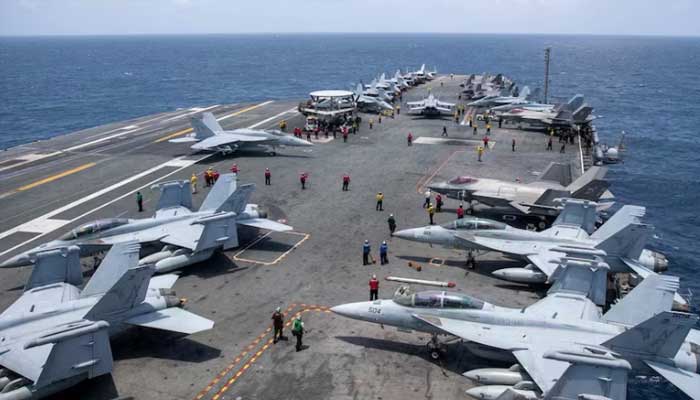
By ordering a substantial reduction in joint military exercises with South Korea while labelling drills hostile to North Korea and rebuking Seoul for not helping the US in the Iran war, President Trump has revived memories of his first-term transactional diplomacy.
Talking to the reporters on Wednesday, Trump praised the leader of nuclear-armed North Korea, “I know Kim Jong Un very well, and he’s going to be fine as long as we have a smart president. The fact that I get along with him – that’s a good thing, not a bad thing. He has 57 very powerful nuclear weapons.”
He also expressed his desire to meet Kim as soon as in the next two to three months, according to the Wall Street Journal. However, North Korean leader’s sister Kim Yo Jong not only disputed the claims of recent communication between Trump and Kim but also called their personal relationship “excellent.”
The US’ move to scale back the drills with South Korea also drew a response from Pyongyang, as the country coolly responded to it while still calling the drills “provocative and aggressive” against North Korea despite being shortened.
Analysts suggest that if the US holds a summit with Kim, that would be beneficial for the Trump administration, especially at crucial times when conflict with Iran stands unresolved and mid-term November elections are approaching. Some see Trump’s move to cut drills with South Korea as the beginning of a new chapter in US-North Korea relations.
Rachel Minyoung Lee, Senior Fellow for the Stimson Center’s Korea Program, differs: “It could create an opening, but I think it is premature to call it a new chapter. Trump has taken a consequential step and, unusually for a US president, adopted language remarkably close to North Korea’s own characterization of the exercises as hostile or provocative. But what matters is what follows. So far, Pyongyang has not reciprocated: it has dismissed the reduction as insufficient, reaffirmed that US hostile policy remains unchanged and conducted short-range missile launches.”
“One concern is that if Trump begins making unilateral concessions in anticipation of diplomacy, Pyongyang could simply pocket them and keep asking for more,” Minyoung Lee told The News International.
Jenny Town, Senior Fellow at the Stimson Center and the Director of 38 North, does not mark it as a new beginning in both countries’ relations as the “effort was not done in a meaningful way.”
“It does, however, exacerbate many tensions in US-ROK relations and send a troubling message to other allies that the US support is conditional.”
Trump’s South Korea move: A concession to Kim?
On Friday, South Korea’s massive “Ulchi Freedom Shield” joint military exercises with the US came to an abrupt end halfway through its scheduled schedule. Though Seoul’s Foreign Minister tried to portray the decision to scale down the drills as a mutual one, some officials suggested otherwise.
However, Rachel thinks that it is fair to characterize the move as an opening concession for North Korea, particularly because Trump acted before receiving any clear reciprocal move from Pyongyang and explicitly connected the decision to his desire for better relations with Kim.
“So Trump has made the first move, but North Korea appears to be trying to use it to see what more concessions it may gain out of Trump rather than reciprocate immediately. Its latest missile launches reinforce how difficult that bargaining dynamic could be,” she added.
Will there be a possibility of the Trump-Kim summit?
Recently, President Trump expressed his intent to meet with the North Korean leader in the coming months later this year. In response to his intent, Pyongyang has not shown any definite indications towards the possibility of a meeting between the two leaders.
Talking about the chances of the meeting, Jenny said, “There’s always a possibility – but North Korea has set high preconditions of what it wants to see before a meeting can be set. So far this has included policy changes (to remove ‘hostile’ elements) and acceptance of its nuclear status. Those are very high bars, especially for just a meeting. If the US is willing to do those things before any negotiations begin, it’s hard to say what the actual summit would be about.”
She continued, “At that point, it would talk in terms of normalization. This begs the question: what is the Trump administration willing to do just to get Kim into a room?”
Rachel also showed some optimism, citing, “I would not rule out a summit. Trump has now publicly said he intends to meet Kim this year, and Pyongyang has conspicuously avoided shutting that door. But there is a big difference between Trump’s desire to meet and Kim deciding that a meeting serves North Korean interests.”
Kim’s Russia-China ties: Less need for the US?
North Korea enjoys good relations with both China and Russia. Beijing acts as its main economic lifeline and trading partner, providing it with significant necessities of food, fuel and goods. Militarily, Pyongyang is closer to Russia. Both countries signed a Comprehensive Strategic Partnership in June 2024, which includes a mutual-defense commitment.
Russia has provided economic assistance and reportedly helped North Korea improve military capabilities, including air-defense and electronic-warfare systems.
Given Kim’s closer ties with both China and Russia, analysts suggested that North Korea’s reluctant behaviour related to meeting Trump could indicate a move towards distancing itself from the US.
However, Jenny does not see it that way as she believes that the US has a lot more to offer than any other country in terms of legitimacy and sanctions lifting.
“But right now, North Korea has no urgency to try to pursue those things, especially since Russia, China and others are showing willingness to rebuild their relations with North Korea – including economic relations – despite sanctions still being in place,” she added.
Trump’s personal relationship with Kim
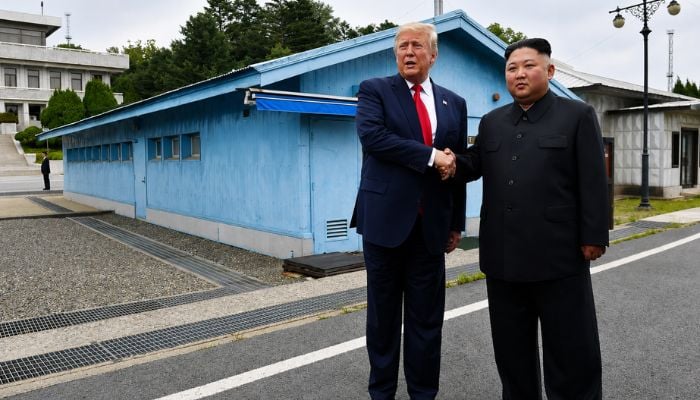
President Trump’s relationship with Kim Jong Un has gone through a remarkable transformation in past years. In 2017, during Trump’s first term in presidential office, he threatened North Korea with “fire and fury” over its expanding nuclear arsenals.
However, in 2018, a significant change came. Once called foes, both leaders became summit partners in Singapore, marking the first meeting between the sitting US president and the North Korean leader. In 2019, they met in Hanoi to achieve a substantial nuclear deal, but the deal collapsed and the reason was a deadlock over what North Korea would give up versus what sanction relief the US would provide. In the preceding years, the world witnessed a halt in diplomacy between them over the failure to produce a denuclearisation agreement.
In today’s changing diplomatic landscape, Rachel believes that the relationship still has some value because North Korea has deliberately preserved it.
She explained, “So the personal channel may provide a mechanism for restarting diplomacy. However, I am not optimistic that there will be summit-level engagement, or that, if there is, it will lead to a meaningful outcome. The strategic landscape is profoundly different from 2019. North Korea has a much larger and more sophisticated nuclear arsenal, an alliance with Russia, growing alignment with China on security issues, and a much stronger sense of itself as a consequential regional and global actor.”
Also, North Korea is now asking the United States to “respect” its nuclear-armed status and drop its “hostile policy.” That is a tall order. The personal relationship might help get Trump and Kim into a room if Trump accedes to North Korea’s terms, but it cannot by itself bridge the much larger policy gap between their governments.
Denuclearization issue
According to Jenny, “There is no real urgency for North Korea to meet with the US for negotiations that will likely require him to make some kind of concessions on its nuclear and WMD programs, whether under the framework of denuclearization or threat reduction, or the like.”
Rachel says the diplomatic landscape between the US and North Korea has shifted dramatically since the 2018–2019 summits. Previously, both sides could envision a pathway where complete denuclearization was traded for political, security, and economic benefits. Today, that framework is severely eroded.
“A meeting therefore might look less like a grand bargain over denuclearization and more like negotiations between two nuclear adversaries over coexistence: constraints on nuclear and missile activities, military risk reduction, sanctions, exercises, confidence-building measures, diplomatic normalization, or crisis-management mechanisms.”
“And it raises an even more fundamental question: given North Korea’s stronger strategic position and its relationships with Russia and China, what does Pyongyang now believe improved relations with Washington are actually worth? If that value has diminished, the possible scope of another Trump-Kim diplomatic cycle may be much narrower than it was seven years ago,” she added.