South Korea is also set to test the Arctic commercial shipping route in the nation’s first commercial voyage on the route to test its viability especially at the crucial geopolitical times when the maritime chokepoints are being weaponized to disrupt the trade.
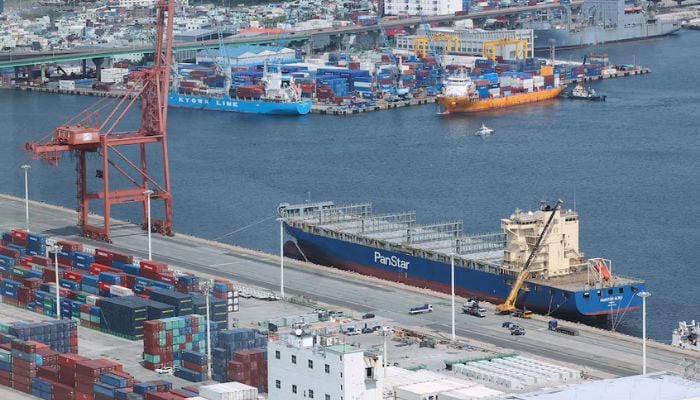
On Saturday, a South Korean container ship set sail aimed at turning the south eastern port of Busan into a global maritime hub.
The PanStar Acro has embarked on a 40- to 45-day voyage, navigating north past Russia’s eastern Kamchatka Peninsula, crossing the Bering Sea, and traversing the Northern Sea Route.
The journey includes scheduled stops in Felixstowe (UK), Rotterdam (Netherlands), and Gdansk (Poland) before its return. It is scheduled to flag off around 8 p.m depending on loading and preparations, a government official said.
According to President Lee Jae Myung, the Arctic shipping is a key priority for South Korea, making the country the powerhouse and positioning the Arctic as a regular trade route by 2030.
The Arctic path is also meant to reduce transit distances between Asia and Europe by up to 35 percent as compared to the Suez Canal route that could save fuel significantly.
Growing western concerns
The South Korean project also risks stirring the concerns among the Western allies. As the Northern Sea route passes predominantly along Russia’s northern coast, the journey requires coordination, transit permits and navigational support from Moscow.
According to the western countries, it will break the Russian economic isolation in the midst of ongoing conflict with Ukraine and complicate the sanctions compliance.
Seoul has consulted with Moscow about the journey, including whether the ship needed help to tackle any problems, such as getting stuck in ice.
China’s Arctic ‘Ice Silk Road’
The move comes weeks after China launched a regular container shipping service through the Arctic as a way to bypass the world’s maritime chokepoints.
A Chinese container shipping company named Sea Legend initiated its first regular shipping service through the Arctic, aiming to shorten the journey between Asia and Europe and access the Turkish and North African markets.
In the wake of climate-change driven melting of ice, the Arctic has emerged as a key shipping route. The Arctic sea ice shrank by 5.8 percent between 2024 and 2025 during the peak winter period.
In 2025, 88 vessels made 103 transits through the route, up from 97 in 2024 and 43 in 2022, mainly from Russia and China, as per Norway’s Centre for High North Logistics data.