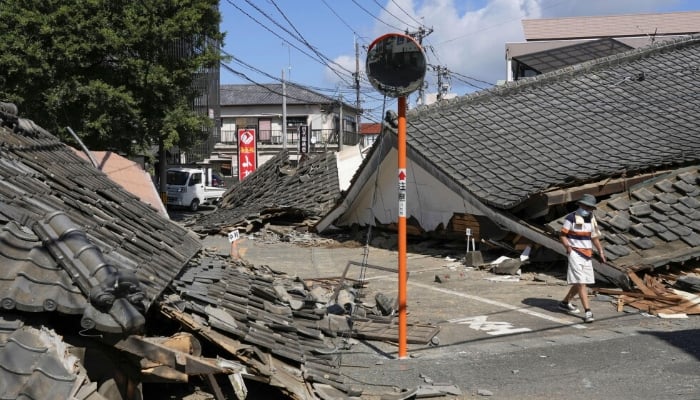
The death toll from this week’s Japan earthquake has risen to 34, according to officials, as rescue teams continue searching for survivors in Kumamoto prefecture.
According to CNN, the 6.8 magnitude earthquake struck southern Japan on Tuesday, bringing down buildings, damaging infrastructure and triggering a series of aftershocks.
Officials said some of the reported deaths are still being investigated to confirm whether they were directly linked to the quake.
Japan experiences some of the world’s most frequent earthquakes because it sits at the meeting point of four tectonic plates and lies on the Pacific Ring of Fire, where seismic activity is among the highest on Earth.
Prime Minister Sanae Takaichi said: “For those who are waiting for aid, we will be devoting our full efforts to rescue activities and aid,” adding that efforts were under way to restore electricity in affected areas.
Despite the danger, Japan is regarded as a global leader in earthquake preparedness, with strict building regulations, advanced early warning systems and regular emergency drills.
Professor Shoichi Yoshioka of Kobe University told CNN: “About 10% of the world’s earthquakes of magnitude 6 or higher occur in or around Japan, so the risk is much higher than in places like Europe or the eastern United States, where earthquakes are rare.”
Authorities have also warned residents about high temperatures, which are making rescue operations more difficult.