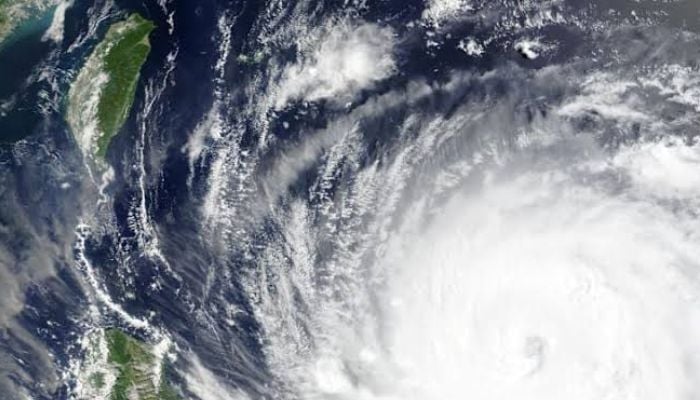
On Thursday, China and Taiwan are reportedly bracing for the most destructive tropical storm in years as Typhoon Bavi swirls southeast of Taiwan with winds near 200 kph.
According to authorities in Taiwan, the weather forecast confirmed that up to one metre of rain will hit the island’s northern mountains around Taipei and some 29,000 soldiers have been placed on crucial positions, as it braces for the most powerful typhoon since Kong-rey in 2014 which killed three people.
The world’s second-largest economy along with adjacent Japan and Taiwan is facing escalating extreme weather events that scientists link to climate change. This time of year is so alarming because the anticipated return of El Niño could raise the temperatures and help fuel more frequent and intense typhoons.
Earlier, a warning was issued by the United Nations’ weather watchdog urging governments and humanitarian organizations to fortify against harsh meteorological phenomena including heatwaves, droughts and heavy rainfall due to the El Niño atmospheric phenomenon.
An expert at AccuWeather, forecasting service said: “ Some loss of wind intensity is anticipated this Thursday but Bavi will remain a dangerous storm as it impacts eastern China Friday into Monday.”
The country’s meteorological agency cautioned residents to remain on high alert on Friday and Saturday for landslides, flooding and storm surges. It has been observed that the remains of Typhoon Maysak spawned at least two island tornadoes and major flooding in China’s central Hubei province.
Given the severity of the situation, residents were focusing on overcoming hardship before the next storm hits. Footage broadcast by state media showed people scrambling out of stand-story windows to reach first responders to escape their apartments and pulling belongings from floodwaters while relief workers deployed drones to deliver essentials to inaccessible areas.
Xiangbo Feng, a research scientist in tropical cyclones at Imperial College London said: “ We should pay close attention to Bavi as it has spent a long time intensifying over the Pacific, extracting energy from the warm ocean and accumulating larger amounts of moisture.”
“When it would make landfall or get close to coastal regions, the damage could be catastrophic,” Feng continued.
Keeping in view the current scenario, Japan Airlines confirmed it had cancelled 48 domestic flights and two international flights scheduled for Friday because of the typhoon.
Meanwhile, all Nippon Airways said it would cancel 34 flights serving Okinawa’s Ishigaki and Miyako airports, severely affecting around 1,800 passengers; furthermore 33 domestic flights are set to be cancelled on Saturday, significantly impacting an additional 5,900 people.