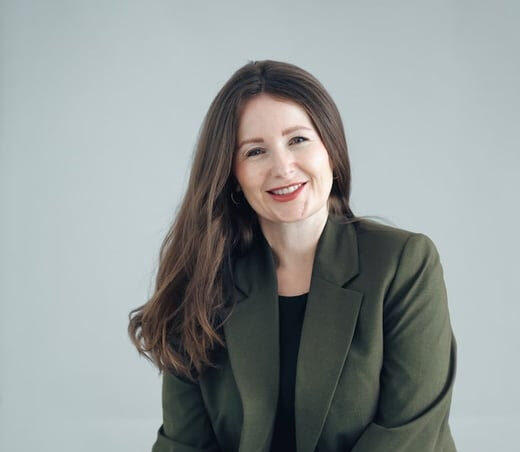
The Private Standard Founder launches Professional Nanny Standard cohort to address UAE household safety gap
New training created by former British governess focuses on safety, boundaries and private household skills in a market where most children are raised by nannies

Abu Dhabi/Dubai, UAE, 2 June 2026: Lynsay Kilbane, a former British governess with more than 15 years of experience working inside ultra‑high‑net‑worth (UHNW) households around the world and the Founder of The Private Standard, the specialist recruitment firm founded by Lynsay Kilbane, has launched the Professional Nanny Standard, a specialist programme designed to close critical skills gaps in how nannies operate inside private homes in the UAE.
The Professional Nanny Standard is a two‑day intensive course that will be delivered in Abu Dhabi and Dubai . It combines paediatric first aid and water safety delivered via accredited partners with modules on household systems, communication, professional standards and cultural expectations in Gulf private households. Each attendee completes tailored exercises for the specific family they work with and leaves with a bespoke nanny manual that remains with the family, providing a lasting framework for how the home and childcare are run.
The launch comes as research shows just how embedded nanny care is in UAE family life. A UAE Nanny Salary Survey reported an estimated 750,000 nannies working across the country, with 95 per cent of children under nanny care and children spending an average of 55 hours a week with them. A KHDA‑linked survey found that 94 per cent of children were being reared by nannies or maids, underlining how central domestic staff have become to day‑to‑day childcare.
Despite this dependence, only around 15 per cent of nannies surveyed in the UAE had any kind of childcare training. Separate reporting on first aid training found that fewer than 5 per cent of the nannies and maids seen by one UAE provider knew basic CPR or choking response skills, even though they were primary caregivers for young children. Local doctors report that choking is common among toddlers, that about 80 per cent of paediatric foreign‑body aspiration episodes occur in children younger than three, and that peak incidence is between one and two years old.
Against this backdrop, Kilbane’s Professional Nanny Standard has been deliberately built as something different from standard childcare or child development courses. Rather than focusing on how to engage the child, the programme concentrates on the four key themes of safety, skills, standards, support. It will equip nannies with the right skills they would need need around the child from household risk awareness, to role boundaries, to communication with principals, as well as the standards of confidentiality, cultural expectations, water safety, household systems and the day‑to‑day running of a child’s life inside a private home.
“In this region, we use the word ‘nanny’ very loosely. Most of the women holding that title have never been shown what professional standards look like inside a private household,” said Lynsay Kilbane, founder of the Professional Nanny Standard. “My training is intentionally one of a kind. It is not about child development. It is about everything around the child, from safety and systems to boundaries and expectations, so that the person you leave in charge of your children can actually operate at the standard families assume.”
Kilbane, who has worked as a professional nanny and governess in some of the world’s most elite households before basing herself in Abu Dhabi and launching The Private Standard, describes the programme as a risk‑control tool for families, not a nice‑to‑have extra.
“When you know that toddlers are the age group most likely to choke, swallow batteries or need immediate intervention, training stops being optional,” she added. “Families in the UAE often expect one person to cook, clean and care for the children. That blurring of roles is exactly why clear standards, boundaries and safety training matter. We have asked everything of these women and invested almost nothing in them. This programme is my way of changing that, household by household.”
Kilbane has designed the curriculum around the realities of UHNW and high‑expectation homes in the GCC, where privacy, discretion and the ability to integrate into complex household teams are as important as technical skills. The training is intended to sit alongside, rather than replace, existing childcare and paediatric first‑aid courses by focusing on the professional behaviours, systems and risk awareness that reduce the likelihood of incidents in the first place.
Places on the founding cohorts are limited, with ten nannies per date, reflecting Kilbane’s decision to keep the training highly practical and interactive. Full details of the Professional Nanny Standard curriculum and upcoming training dates are available at www.lynsaykilbane.com.