Unlike oil and gas, which expose countries to price spikes and geopolitical risk, renewables offer stable, domestically produced power that can strengthen energy security, cut emissions of harmful greenhouse gases and support long-term growth.
In the second in our series focusing on how renewables are shaping the future of energy security, UN News looks at four countries which are striving to increase the share of greener energy sources.
Why it matters:
As The UN Secretary-General António Guterres said in March: “The fastest path to energy security, economic security, and national security is clear: speed up a just transition away from fossil fuels and toward renewable energy.”
Germany: Accelerating the energy transition
The big picture:
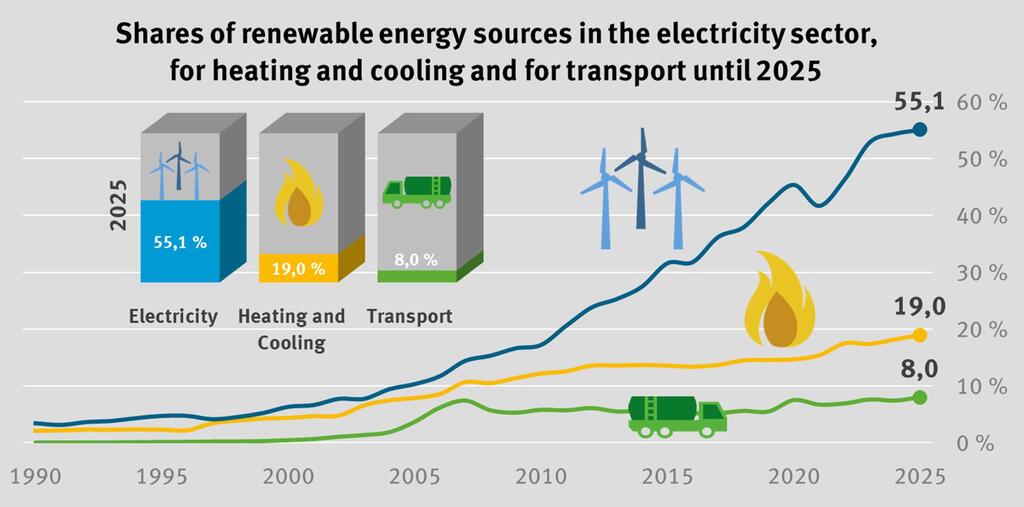
Germany has one of the world’s biggest economies and according to its environment agency “renewable energies have undergone constant growth” as part of the European nation’s long-term shift away from fossil fuels.
Renewables are helping reduce reliance on imported fuels and insulating consumers from global price shocks as well as tackling climate change.
Renewable energy in Germany.
Energy mix:
- Renewables provide 55 per cent of electricity consumption
- Wind – and to a lesser extent, solar – dominates.
- Biomass (energy generated from organic matter) and hydropower are also part of the mix
- Fossil fuels are still used in industry and transport
Key challenge:
Wind power is by far the most important energy source, and with that comes sometimes inconsistent levels of power generation. Ensuring that industrial demand is met and safeguarding grid stability remains a major hurdle. Meanwhile, there is a continued need for fossil fuel backup during the transition to renewables.
Progress toward full transition:
- Expansion of offshore wind and solar
- Grid modernisation and expansion as well as investing in storage facilities are described as “crucial” to the transition process
India: Scaling renewables for development
The big picture:
India has a growing economy and is the most populous country in the world. It still relies on coal to generate the electricity it needs although solar and wind energy is rapidly expanding.
Renewables are helping to reduce costly fuel imports and to stabilise energy supplies in a dynamic economy.
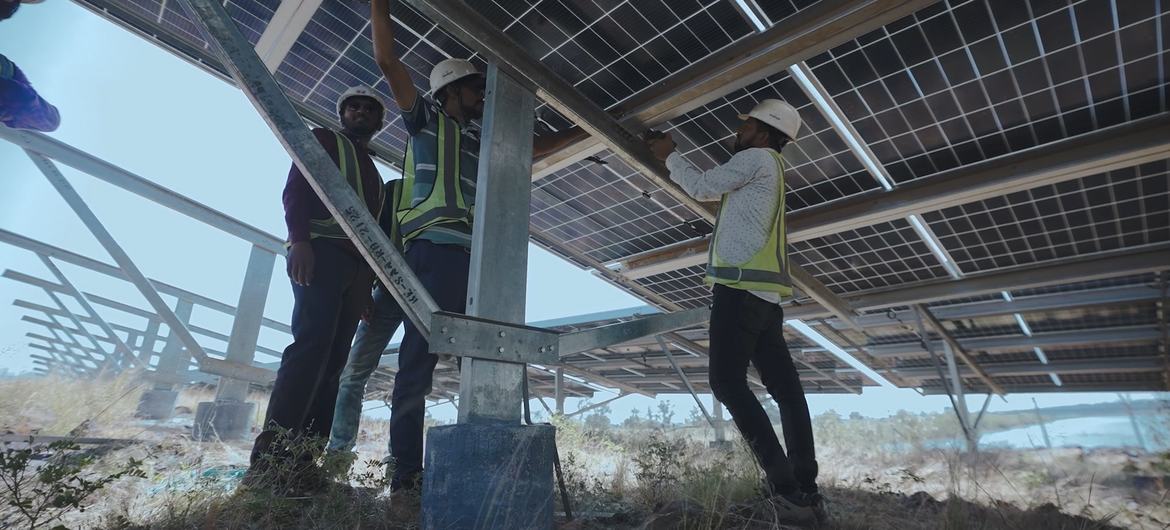
Technicians work on a solar panel in Chattisgarh State, India.
Energy mix:
- Renewables account for around 30% of installed capacity (a measure of maximum potential power output)
- Solar is rapidly expanding
- Coal remains dominant
Key challenge:
Meeting the rapidly rising demand for energy as the economy expands while reducing coal dependence remains challenging, particularly given concerns about the affordability of renewables and the need to ensure reliable power across a vast country.
Progress toward full transition:
- Large solar parks and rooftop expansion
- Wind and hybrid systems
- Green hydrogen initiatives
Solar-powered livelihood programmes are improving incomes and energy access in rural communities. Read more here.
Bolivia: Shifting from gas to renewables
The big picture:
Bolivia is working to diversify away from natural gas, which dominates its energy system. Hydropower is key to the South American country’s long-term energy stability and economic resilience.
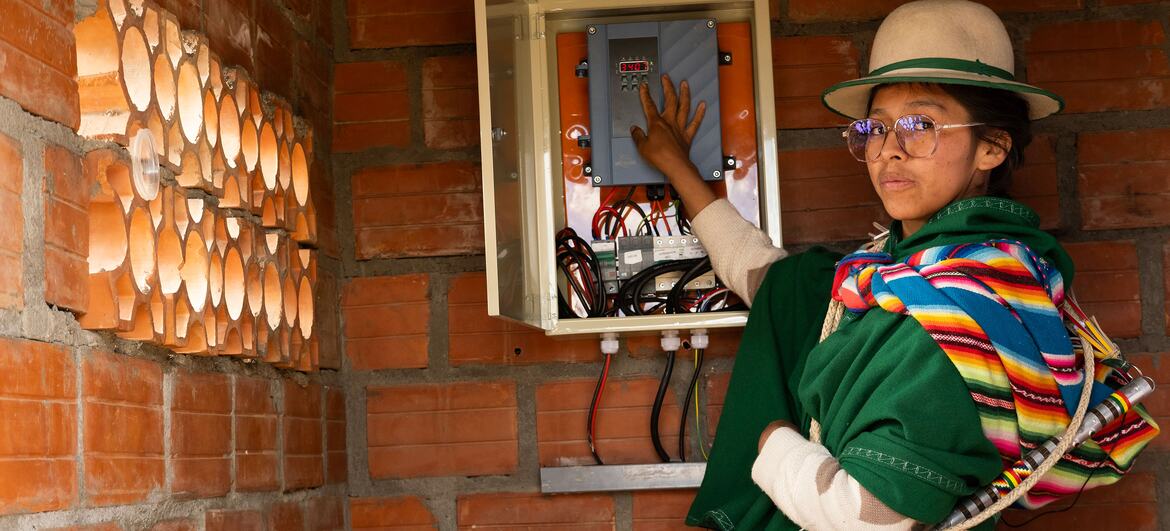
A woman in rural Bolivia operates a solar power-driven irrigation system.
Energy mix:
- Renewables provide around 30–35% of electricity generation
- Hydropower is the main renewable source
- Solar and wind are expanding
- Natural gas remains dominant
Key challenge:
Bolivia continues to rely on gas revenues and the infrastructure in place to extract, process and deliver the fuel. This heavy structural dependence and accessing sufficient finance for the large-scale deployment of renewables makes a rapid transition away from fossil fuel sources challenging.
Progress toward full transition:
- Solar expansion in rural and high-altitude regions
- Wind farm development
- National roadmap targeting major renewable growth
Read how Solar-powered irrigation is helping rural communities improve agricultural productivity in Bolivia.
Nigeria: Unlocking solar potential
The big picture:
Nigeria is Africa’s largest economy and most populous country. More than 60 per cent of its 241 million people live in poverty according to UN figures.
Despite the development challenges it faces, it has vast renewable potential even though it remains heavily dependent on fossil fuels. Frequent power shortages and reliance on diesel generators highlight the need for a more resilient, renewable-based system.
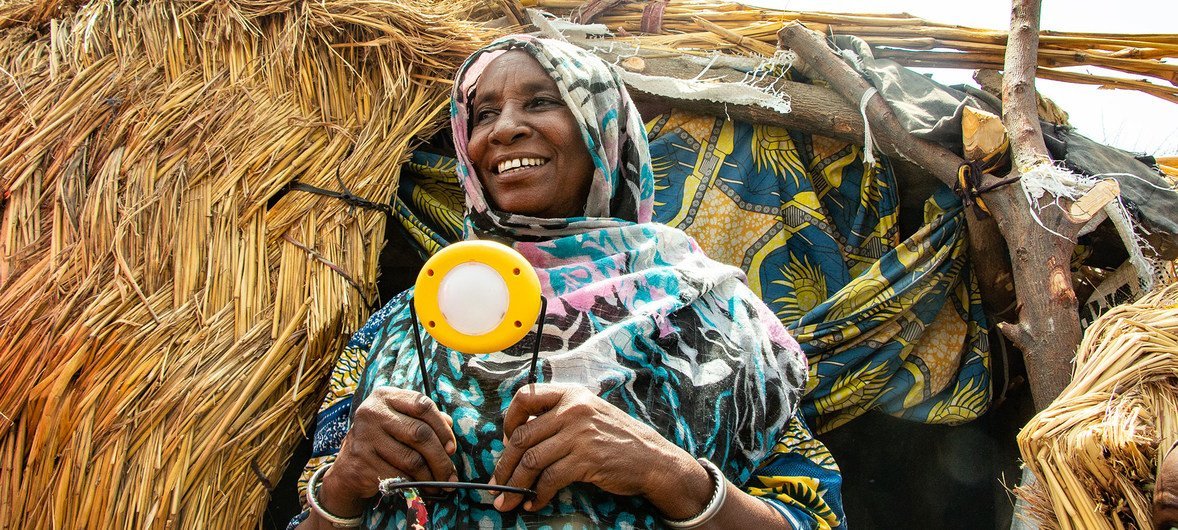
A woman holds a solar lamp in a village in Nigeria.
Energy mix:
- Renewables account for around 20–25 per cent of electricity generation
- Hydropower provides most renewable supply
- Solar is growing but underdeveloped
- Gas dominates electricity generation
Key challenge:
The West African nation’s aim is to generate 50 per cent of its electricity from renewables by 2030 and to do this it will need to build more infrastructure especially a more reliable grid, spend more money and wean industry from its reliance on gas-fired power plants.
Progress toward full transition:
- Expansion of off-grid solar and mini-grids
- National electrification programmes
- Increasing investment in home solar systems
Read how UN-backed solar mini-grid programmes in Nigeria are providing electricity to rural communities, supporting businesses and improving the quality of life.
The bottom line:
Across very different economies, from industrialized Germany to emerging powers like India and developing nations such as Bolivia and Nigeria, a clear trend is emerging:
- Renewables are strengthening energy security
- They are reducing dependence on volatile fossil fuel markets
- They are delivering tangible benefits to people and economies
But challenges remain — from financing and infrastructure to balancing reliability with rapid expansion.