In Iran, meanwhile, concerns are growing over a looming shortage of essential medical supplies caused by Israeli-US bombing before the extended ceasefire announcement by President Trump on Wednesday.
“The announcement of a ceasefire early this month was a welcome relief. The reality on the ground, however, is very different,” said Cristhian Cortez Cardoza, Deputy Regional Director for the Middle East and North Africa at UN-partner the International Federation of Red Cross and Red Crescent Societies.
Speaking from Beirut after returning from Tehran, Mr. Cardoza insisted that “a ceasefire does not mean the conflict is over”. The consequences of weeks of “intense conflict” will continue to be felt by Iranian society “for months and years to come”, he said.
Hundreds of Iranian health facilities have been damaged or destroyed, the IFRC official explained, and there is increasing concern about medical access and potential shortages of key services, such as dialysis machines and prosthetic devices, because of destruction to manufacturing.
Because of the war, the IFRC factory that supplies 60 per cent of the country’s dialysis filters only has enough raw materials to continue production for the next three months.
Gaza destruction
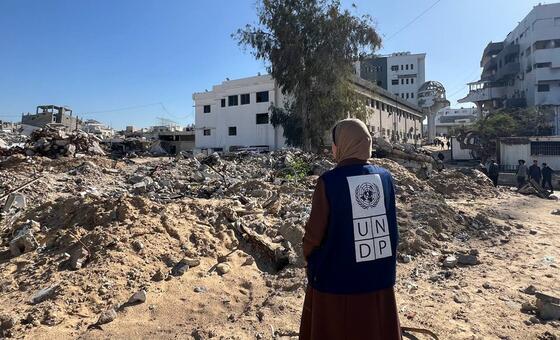
The situation remains precarious in Gaza, meanwhile, with more than 1,800 health facilities partially or completely destroyed, according to the UN World Health Organization (WHO).
“It ranges from big hospitals like Al Shifa in Gaza City to smaller primary health care centres, clinics, pharmacies and laboratories,” said the agency’s new representative in the Occupied Palestinian Territories, Dr Reinhilde Van de Weerdt.
Speaking from Jerusalem, Dr Van de Weerdt reported on her first visit to Gaza as the new WHO representative.
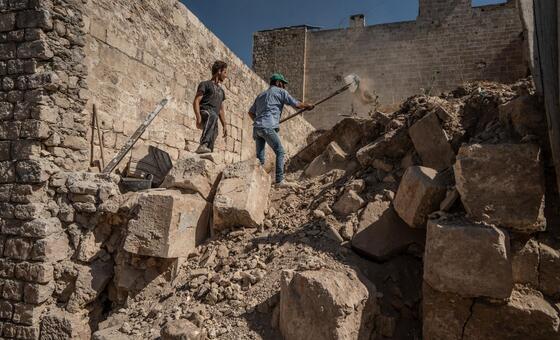
“I just spent my first week in Gaza earlier this month. And really nothing prepares you for the scale of the destruction. You can read the reports, study the numbers, but standing in the street in the middle of endless metres-high piles of rubble is something else entirely.”
Tents, rubble and rats
Across Gaza, most Palestinian families remain displaced, the veteran humanitarian noted. “They live in tents amidst the rubble, dependent on humanitarian assistance for the most basic of their needs. And despite the ceasefire, airstrikes, shelling and gunfire continued.”
In addition to those dangers, more than 17,000 cases of rodent-linked infections have been reported so far this year among Gaza’s displaced and more than 80 per cent of displacement sites report skin infections, such as scabies, lice and bed bugs – “the unfortunate but predictable consequence when people live in a collapsed living environment”, the WHO official said.
“For WHO and the health partners, we need to have a better understanding on the diseases that are affecting the people in Gaza. We therefore need laboratory equipment and supplies to enter Gaza. As many of you know, this equipment and supplies do not enter Gaza, which leaves us blind.”
To address this growing health threat “things need to change”, Dr Van de Weerdt insisted. “Health and healthcare workers need to be protected; essential medicines and supplies must enter Gaza. Bureaucratic processes and access restrictions on these globally recognised essential medicines and supplies must be removed.”
‘Dynamic threat’
Echoing that message, the head of the UN Mine Action Service (UNMAS) in the Occupied Palestinian Territory underscored the ever-present danger from unexploded ordnance across the shattered enclave.
The lethal threat is now “essentially ingrained or embedded in the debris at this point in time,” said Julius Dirk Van Der Walt, Chief of UNMAS, in the OPT.
“We’ve barely scratched the surface in understanding what is the level of contamination that we will be encountering in Gaza,” he continued.
“What we do know is that this will be a dynamic threat…you will have families returning to their homes; a father would maybe walk into the house, find a hand grenade, wanting to move it away from his children.”