While the determination of Syrians to rebuild their country following the overthrow of the Assad regime in December 2024 has been widely recognised, experts caution that sustained international engagement is essential to keep the transition on track amid ongoing humanitarian challenges.
A UN Team of Experts on the Rule of Law and Sexual Violence in Conflict has been working in Syria to support national institutions in investigating and prosecuting conflict-related sexual violence, while also strengthening broader rule-of-law systems.
Speaking to UN News last week, Sofia Candeias, Judicial Affairs Officer with the team, highlighted both the advances made and the significant challenges that remain, particularly in addressing sexual violence in wartime, which was widespread and systematically used during Syria’s brutal civil conflict.
“It is remarkable that in one year, the Syrians were able to put all of this in place,” she said.
Yet beneath this progress lies a far more fragile reality – one defined by weakened institutions, widespread trauma, and a race against time to translate commitments into meaningful accountability.
The UN continues to support a Syrian-led, Syrian-owned political process in line with Security Council resolutions 2254 and 2799.
Building from the ground up
The UN Team of Experts, established by Security Council resolution 1888 in 2009, has been working in Syria since the fall of the Assad regime in December 2024. The team is co-led by the Department of Peace Operations (DPO), the UN Human Rights Office (OHCHR), the UN Development Programme (UNDP) and the Office of the Special Representative of the Secretary-General on Sexual Violence in Conflict, and its mandate is to support national institutions to strengthen the rule-of-law response to sexual violence and conflict.
Deployed three times, the team has worked closely with key Syrian bodies, including the National Commission for Transitional Justice, the Commission for Missing Persons, multiple ministries, and civil society organisations.
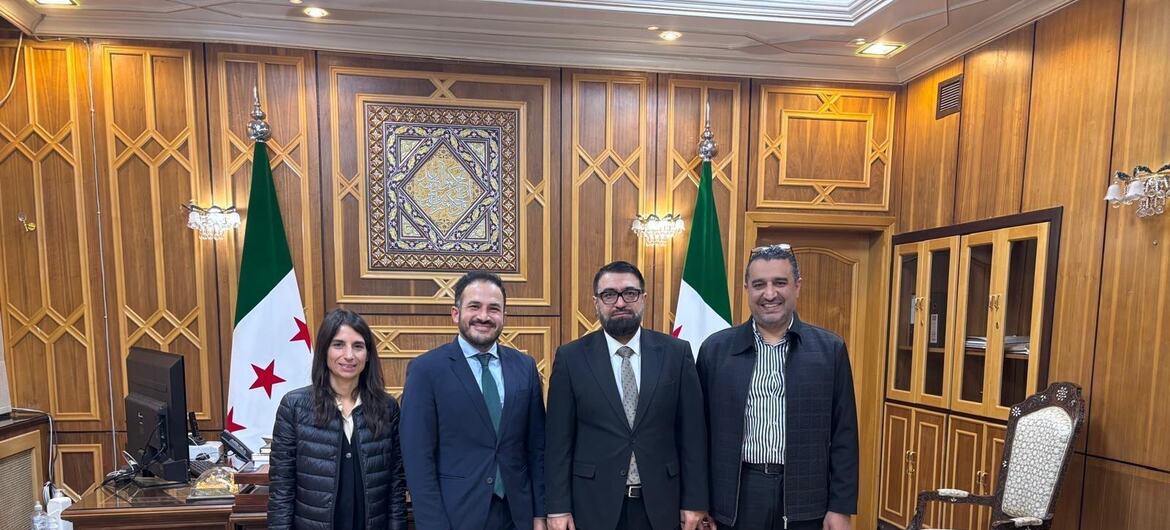
Two UN Experts on the Rule of Law and Sexual Violence in Conflict (Sofia Candeias on the far left) meet the Minister of Justice of Syria (second from right) to discuss the rule of law response.
This approach, building national ownership while providing technical support, is central to ensuring that justice efforts are sustainable.
“Civil society organisations are really the backbone of what transitional justice will be,” Ms. Candeias said. “They are also the only way to truly listen to survivors.”
Syrian civil society groups have spent years documenting human rights violations, which may form the evidentiary foundation for future prosecutions.
Systematic and unfathomable
One of the greatest challenges facing Syria’s justice process is also one of its least visible: the true scale of conflict-related sexual violence.
“The honest assessment is that we don’t know the full scale of the problem, and we probably never will,” Ms. Candeias said.
What is known is deeply alarming. Sexual violence was widespread and systematically used throughout the conflict, in detention centres, at checkpoints, and during displacement. It was not incidental, but deliberate, she added.
“There are many more cases than those that have actually been documented,” she noted, pointing to stigma as a major barrier preventing survivors from coming forward.
“This was a systematic enterprise and there was a deliberate tactic to target and to use sexual violence to humiliate and to punish civilians”, Ms. Candeias underlined.
Men and boys targeted too
While women and girls were disproportionately affected, men and boys were also heavily targeted, particularly in detention. One Syrian partner organisation found that 98 per cent of detained men and boys in its dataset reported experiencing sexual violence – although even this figure likely underrepresents the reality, as those are just documented cases.
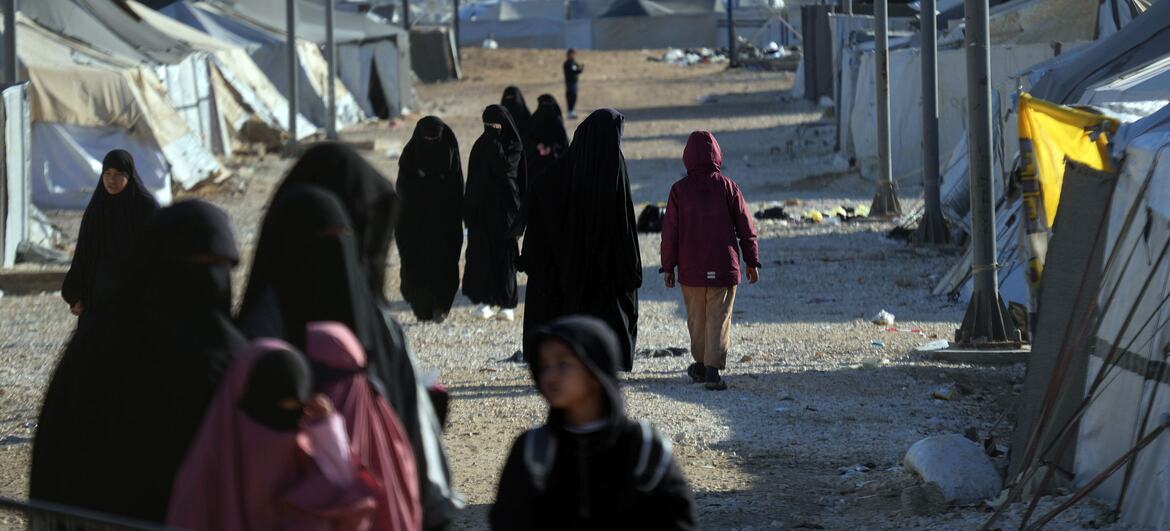
Women and children walk through the Al Hol Camp in Syria, a displacement site housing over 30,000 people (file).
Staying silent
Stigma is widely seen as the single greatest obstacle to justice.
It operates at multiple levels: internally, as survivors struggle with shame; within communities, where disclosure can lead to rejection; and socially, where silence often prevails. As a result, many survivors never speak out.
To address this, the UN and its partners emphasise the need to create conditions in which survivors feel safe to seek help, which begins with public recognition, and a proactive attitude, “searching for the victims, and ensuring they have the conditions to come forward.”
“Acknowledging the gravity of sexual violence, and that is a crime, puts the scene on the side of the perpetrators, which is the first step.” Ms. Candeias said.
Equally important is the creation of “safe spaces”, where survivors can access medical care, psychosocial support, and legal assistance without fear of stigma or retaliation. What constitutes a safe space, however, varies across communities, making local engagement critical.
Progress without capacity
Despite institutional advances, Syria’s ability to deliver justice remains severely constrained. Years of conflict have hollowed out the country’s medical, forensic and judicial systems.
Without adequate forensic capacity, evidence cannot be properly collected or preserved. Without trained investigators and prosecutors, cases cannot move forward. Without psychosocial support, survivors are less likely to come forward at all.
“What we want is the citizens to be able to vindicate their rights, because a survivor is not only a survivor, but also an agent, a citizen,” Ms. Candeias pointed out.
A narrowing window
Compounding these challenges is a decline in international funding.
Support for civil society organisations – many of which lead documentation efforts and provide frontline assistance to survivors – has decreased over the past year. Funding for national institutions also remains limited.
For Ms. Candeias, this trend is deeply concerning.
“With so much progress in one year, now we need the technical response to be there,” she said. “The groundwork has been done by the Syrians, but we need more services.”
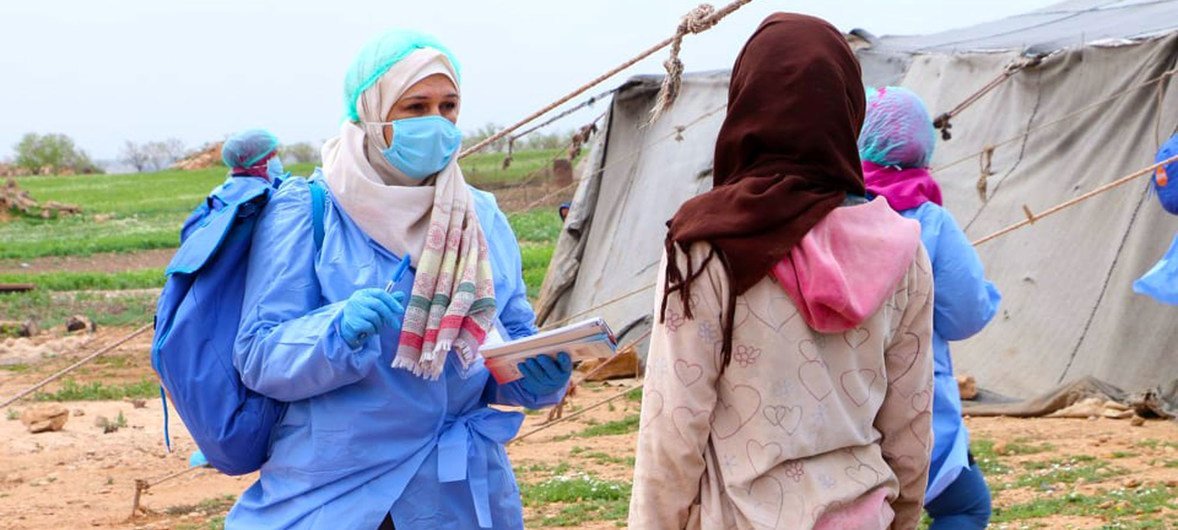
Outreach workers in central-western Syria.
The risk is not only stagnation, but reversal.
If resources fail to materialise, evidence may be lost, survivors may disengage, and early trust in emerging institutions could erode, potentially setting back accountability efforts for years.
Pivotal moment
Syria now stands at a critical juncture.
Its rapid progress on transitional justice presents a rare opportunity to pursue accountability after years of conflict. But that opportunity remains fragile, dependent on sustained support.
“This is the moment to invest,” Ms. Candeias said. “We cannot fail to deliver what they have managed to put forward.”